
Before the first Las Vegas cold snap, check your gas fireplace yourself: replace the remote and wall switch batteries, confirm the pilot lights by the manual, look over the glass and the outside vent, and test your carbon monoxide alarms. A brief dusty smell on first use is common. A rotten egg smell means leave and call for help.
The weather is the reason to do it now. A mid-November cold front (FOX5, November 16, 2026) brought showers back to the valley, with forecast daytime highs between 57°F and 62°F, wind gusts of 35 to 45 mph, and possible snow on Mount Charleston of up to 4 inches at higher elevations. Nights like that are when most of us reach for the fireplace switch for the first time in months, and when a dead battery or a pilot that will not hold becomes a problem.
This is the homeowner side of getting ready. Our fall gas fireplace prep guide covers what a professional service visit includes, from gas pressure to safety controls. Below is what you can check on your own in a few minutes, what is normal, and the signs that mean you should stop and call our team.
What Should You Check Before the First Cold Night?
Here is the short version. Each item has its own section below.
| Check | What to do | Stop and call if |
|---|---|---|
| Pilot and ignition | Light it by the instructions on the unit or in the manual | It will not light or will not stay lit |
| Batteries and remote | Fresh batteries in the remote, wall switch, and any battery backup | New batteries change nothing |
| First fire smell | Open a window and run it with the room ventilated | You smell rotten eggs or sulfur |
| Glass | Look for film, chips, or cracks with the unit off and cool | The glass is cracked or loose |
| Outside vent | Clear plants, debris, and stored items from around the cap | The cap is damaged or something is inside it |
| CO alarms | Press the test button and check the alarm's age | An alarm sounds while the fireplace runs |
| Patio heater | Check the hose and connections, and watch the wind | Bubbles in a soap test or a gas smell |
Will Your Pilot Light Come On, and Stay On?
Start with the pilot, because nothing else matters if the fireplace will not light. Most gas fireplaces use one of two systems. A standing pilot burns all the time, even with the fireplace off, and some owners turn it off for the summer. An intermittent pilot ignition (IPI) system lights the pilot electronically only when you turn the fireplace on. Your owner's manual and the rating plate on the unit tell you which one you have.
For a standing pilot, follow the lighting instructions printed on the label near the controls or in the manual, step by step. Heat & Glo publishes owner videos that walk through relighting a standing pilot and resetting a unit that has gone into lockout. Do it once, carefully. If you smell gas at any point, stop and go to the gas smell section below.
If the pilot lights and then goes out, do not keep trying. That pattern usually points to a worn sensor or a dirty pilot assembly, which is a job for a technician. Our guide to a gas fireplace pilot light that keeps going out explains each cause. If nothing happens at all when you press the switch, our post on a gas fireplace that won't turn on lists the simple checks to try first.
Are the Batteries, Remote and Wall Switch Ready?
Dead batteries are one of the most common reasons a fireplace seems broken on the first cold night. Before the cold front arrives:
- Remote. Put in fresh batteries. If the remote still does nothing, it may need to be paired with the receiver again. Heat & Glo has a video showing how to pair or re-pair a remote to its fireplaces.
- Wall switch. Some wall switches and wall thermostats run on batteries too. Replace them, and if you use a thermostat, set it to heat and above the room temperature.
- Receiver. Some remotes talk to a battery-powered receiver near the controls. If you can reach it without opening anything that holds gas parts, swap its batteries as well.
- Battery backup. Some IPI units have a battery backup. Heat & Glo describes using it to start and run the fireplace during a power outage, so it is worth fresh batteries before winter.
Keep the remote somewhere you can find it, and out of reach of small children. A remote that turns on a fireplace is not a toy.
Is That Smell on First Use Normal, or a Gas Leak?
This is the question we hear most when the weather turns. The answer depends on what the smell is like.
A dusty or hot paint smell is usually normal
A fireplace that sat all summer collects dust on the burner, the logs or media, and the inside surfaces. The first fire burns that off, and you may notice a dusty or slightly burnt smell for a short time. Open a window, run the fireplace for a while, and the smell should fade. If it keeps coming back fire after fire, ask us to take a look.
A brand new fireplace smells stronger. Heat & Glo explains that fireplaces, like grills or ovens, are made with paints and oils that need to be cured, and that a strong odor or white smoke from the fireplace itself during that first burn is not a leak or an exhaust problem. Its guidance is to open windows in the room and others on the same floor for cross-ventilation, turn on ceiling fans, run the unit on high for three hours, let it cool completely, then run it on high for another six to eight hours. Follow the exact break-in steps in your own model's manual.
A rotten egg smell is not normal
Southwest Gas, the natural gas utility for the Las Vegas valley, describes it as a distinct sulfur-like odor, similar to rotten eggs, even if it is faint or brief. It also lists a hissing or roaring sound from piping or an appliance as a sign of a leak. If you notice either one, treat it as an emergency and follow Southwest Gas's steps:
- Exit the building right away, tell others to leave, and leave the doors open.
- Do not smoke or use matches or lighters.
- Do not turn any electric switches, thermostats, or appliance controls on or off.
- Do not start or stop an engine or use an automatic garage door.
- From a safe place, call 911 and Southwest Gas at 877-860-6020, day or night.
Do not go back in or try to relight the fireplace until the responders say it is safe. If the smell is coming from the fireplace, our team can repair it once the gas utility has cleared the home.
Is the Glass Clean, Intact and Safe to Be Near?
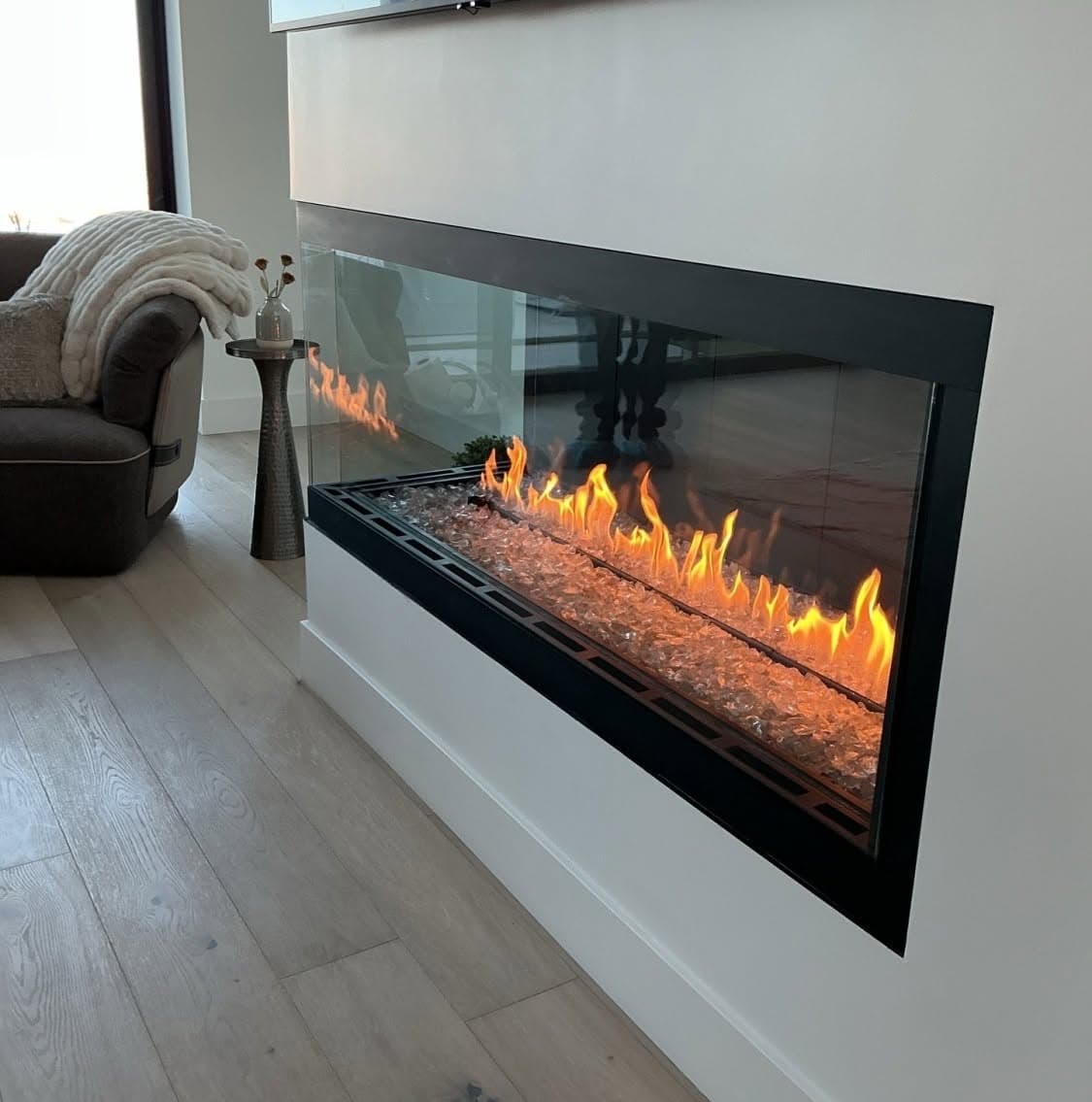
With the fireplace off and fully cool, look closely at the glass front. Three things to check:
- Haze or white film. A cloudy film dims the flame. Heat & Glo recommends cleaning the inside glass after the first year of use. Our guide on white film on gas fireplace glass explains what causes it and how to clean it safely.
- Chips, cracks, or a loose frame. Do not run a fireplace with cracked or damaged glass. Call us, because the glass is part of a sealed system on most gas fireplaces.
- Clear space in front. Summer often fills the hearth with decor, baskets, and stacks of magazines. Move anything that can burn away from the front of the unit before the first fire.
Remember that the glass gets hot. The American Academy of Pediatrics notes that the glass front of a gas fireplace can remain hot for even an hour after the fire has been turned off, and it advises families with toddlers and an existing gas fireplace to buy a barrier or covering separately. Our post on fireplace safety for babies and toddlers covers gates and screens in more detail.
Is the Outside Vent Clear of Debris?
Many gas fireplaces are direct vent units. They pull combustion air from outside and send exhaust back out through a vent cap on an exterior wall or the roof. Step outside and find that cap. You are looking for anything that could block it: plant growth, leaves, trash, a nest, or items stored against the wall over the summer. Windy days can pile debris against walls and fences, so take another look after a gusty stretch.
Clear what you can reach from the outside without taking anything apart. Do not push tools into the vent or remove the cap. If the cap is bent, loose, or has something inside it, that belongs to a technician, since a blocked or damaged vent can affect how safely the fireplace runs.
Do Your Carbon Monoxide Alarms Work?
Any appliance that burns gas can produce carbon monoxide (CO), which you cannot see or smell. A working alarm is your warning. The U.S. Consumer Product Safety Commission says about 170 people in the United States die every year on average from CO produced by non-automotive consumer products. Before the cold snap:
- Test every alarm. The U.S. Fire Administration says to test carbon monoxide alarms at least once a month. The CPSC notes that the test button checks the alarm's circuitry, not the accuracy of the sensor.
- Check placement. The CPSC recommends alarms on every level of the home and outside sleeping areas, kept away from heating vents and anywhere furniture or drapes could cover them.
- Check power and age. Hard wired or plug-in alarms should have battery backup, and every alarm has a recommended replacement age in its product literature.
Know the warning signs too. The CPSC says early CO poisoning feels like the flu without the fever: headache, fatigue, shortness of breath, nausea, and dizziness. If a CO alarm sounds, never ignore it. Get everyone outside into fresh air, call 911, and do not go back in until emergency responders give you permission. Then have the fireplace checked before you use it again.
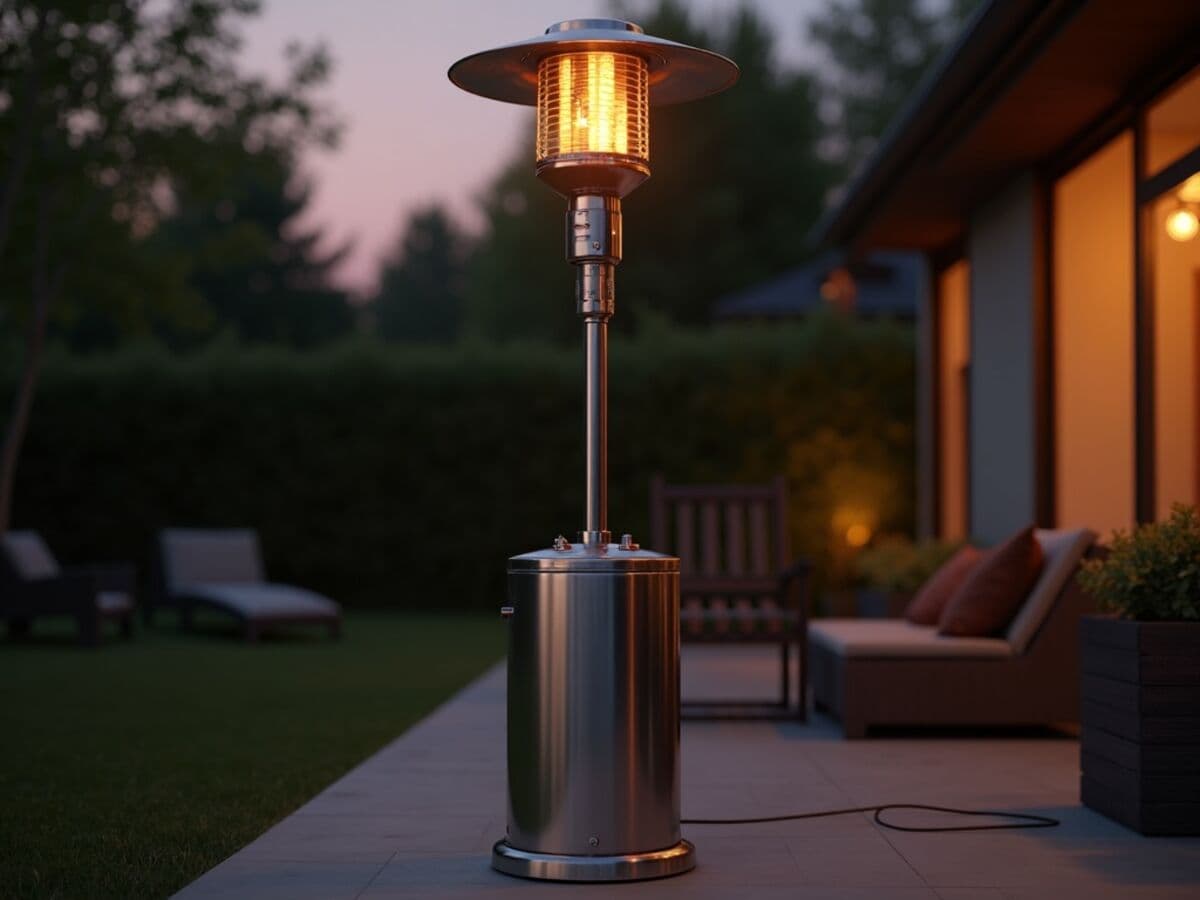
How Do You Run a Patio Heater Safely in High Wind?
This front brought wind as well as cold, and the FOX5 forecast called for gusts of 35 to 45 mph. That matters for patio heaters, which are tall, top-heavy, and burn an open flame.
Manufacturers are clear about wind. The pre-use checklist in Crown Verity's owner's manual for its ZCV-3050-SS natural gas patio heater includes "wind velocity is below 10 mph," and the same manual says to anchor the base securely to the ground with screws to protect the heater from strong wind. A Sunnydaze tabletop heater manual says to keep the reflector in the full down position during windy or rainy conditions, and in high winds to store the unit away or keep it a safe distance from other items in case it is blown over. Gusts of 35 to 45 mph are far past what those manuals allow, so on days like that, leave the heater off.
When the wind drops and you are ready to use it:
- Leak test the connections. The Crown Verity manual says to check all connections and fittings with soapy water, never a flame, and to check the entire hose at least annually. Bubbles mean a leak, so do not use the heater.
- Keep the clearances. That manual lists minimum clearances from combustible materials of 3 feet from the sides and 2 feet from the top. Your heater's manual may differ, so follow your own.
- Outdoors only. Both manuals say outdoor use only. Crown Verity warns that using the heater in an enclosed space can kill you because of carbon monoxide.
- If the wind blows it out. The Sunnydaze manual says to turn the knobs off and wait 5 minutes before relighting after the flame is blown out or the unit tips.
- After use. Shut it off, let it cool, and store it or secure it before the next round of wind.
If you are still choosing a heater, our guide to choosing the right patio heater compares propane, natural gas, and electric models for Las Vegas patios.
When Should You Call for Service Instead?
A homeowner checklist has limits. Stop and call our team, or the gas utility first where noted, when you see:
- Any gas smell. Leave and call 911 and Southwest Gas first. We handle the fireplace repair once the home is cleared.
- A pilot that will not light or will not stay lit after you have followed the lighting instructions once.
- A flame that looks wrong, such as uneven, lazy, or mostly yellow, or soot on the glass.
- A CO alarm that sounded while the fireplace was running.
- Cracked glass or a damaged vent cap.
- No service this year. Southwest Gas recommends that natural gas appliances be serviced annually by a trained professional, and the CPSC recommends an annual professional inspection of heating systems.
Do not open, adjust, or take apart gas valves, burners, ignition parts, or venting yourself. Our gas fireplace repair team handles those parts, and our fall prep guide explains what a full service visit covers.
Getting Ready Before the Next Cold Front
Hearth and Home Specialties has been licensed since 2000 and is an authorized dealer for Heat & Glo, Majestic, and Heatilator. We service the fireplace brands we sell and install, and if you are not sure what brand you have, a photo of the unit or its rating plate usually tells us. Visit our showroom at 3555 W. Quail Ave #A, call (702) 474-4099, or contact us to schedule service before the next cold night. This guide is general information. Always follow your own fireplace and heater manuals, and call 911 and your gas utility in any emergency.
Gas Fireplace Cold Snap FAQs
Is it normal for a gas fireplace to smell the first time you turn it on?
A short burning or dusty smell is common on the first fire of the season, and a new fireplace gives off a stronger smell while its paints and oils cure. A rotten egg or sulfur smell is different and can mean a gas leak.
What should I do if I smell gas near my fireplace?
Leave right away, tell others to leave, and leave the doors open. Do not touch switches, thermostats, or appliance controls. From a safe place outside, call 911 and Southwest Gas at 877-860-6020.
Why won't my gas fireplace pilot light stay lit?
A pilot that lights and then goes out usually points to a worn sensor or a dirty pilot assembly. Follow the lighting instructions on the unit once, and if the pilot still will not hold, stop and call a technician.
How often should I test my carbon monoxide alarm?
The U.S. Fire Administration says to test carbon monoxide alarms at least once a month. The CPSC recommends alarms on every level of the home and outside sleeping areas, with battery backup on hard wired or plug-in models.
Is it safe to use a patio heater on a windy day?
Usually not. One manufacturer's pre-use checklist calls for wind below 10 mph, and manuals warn that heaters can be blown over. On gusty days, leave the heater off, let it cool, and store or anchor it.
Do I still need a professional service if I do this checklist?
Yes. This checklist covers what a homeowner can safely look at. Southwest Gas recommends annual service of natural gas appliances by a trained professional, who checks gas pressure, connections, venting, and safety controls.
Sources
- FOX5 Las Vegas, Shower chances and wind move back into Las Vegas (November 16, 2026)
- Southwest Gas, Safety Information (gas leaks, carbon monoxide, annual appliance service)
- Heat & Glo, Care and Maintenance (pilot relighting, battery backup, remote pairing, lockout reset)
- Heat & Glo, Congrats on the New Gas Fireplace: Here's What to Do First (curing and first burn)
- U.S. Consumer Product Safety Commission, Carbon Monoxide Questions and Answers
- U.S. Fire Administration, Test Carbon Monoxide Alarms at Least Once a Month
- American Academy of Pediatrics, Glass-Fronted Gas Fireplace Burns (February 4, 2019)
- Crown Verity, ZCV-3050-SS Natural Gas Patio Heater Owner's Manual
- Sunnydaze Decor, Outdoor Tabletop Patio Heater Manual