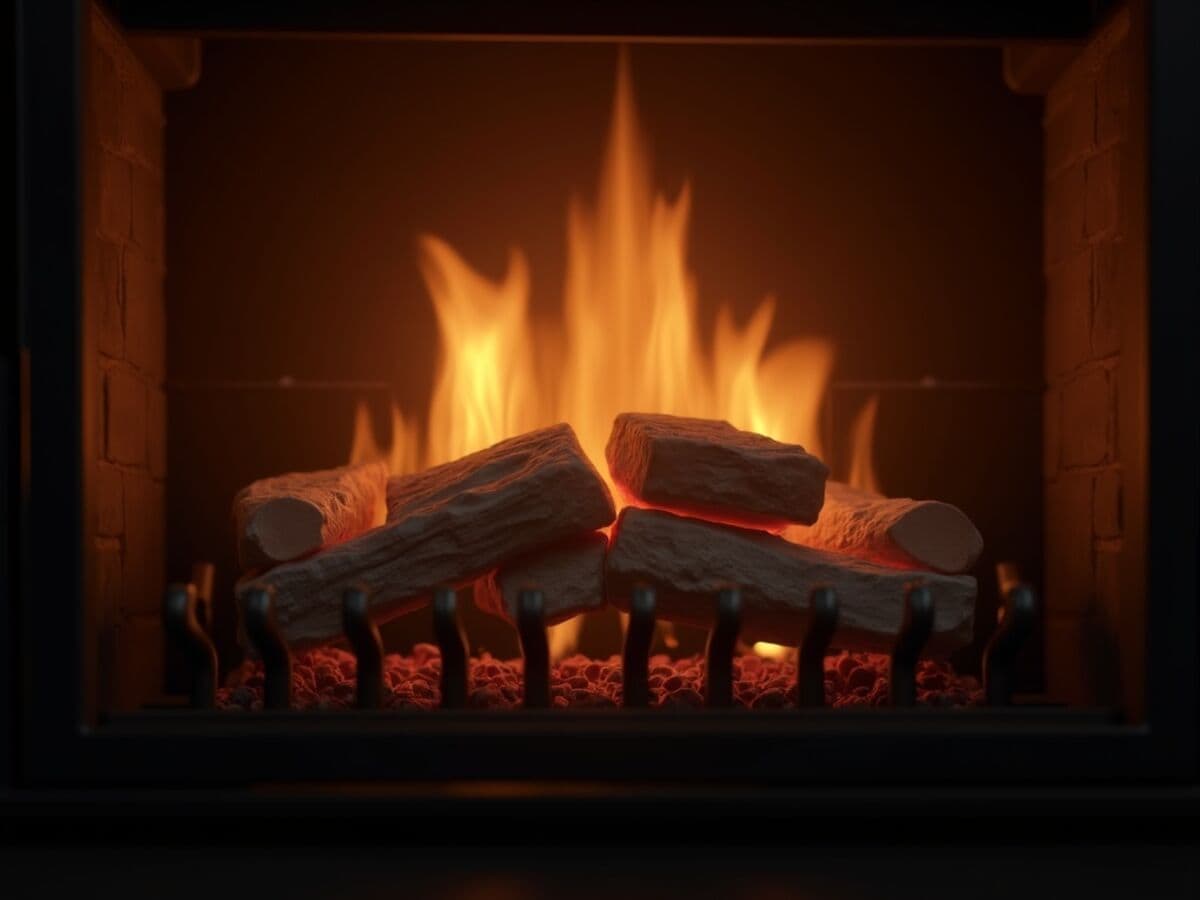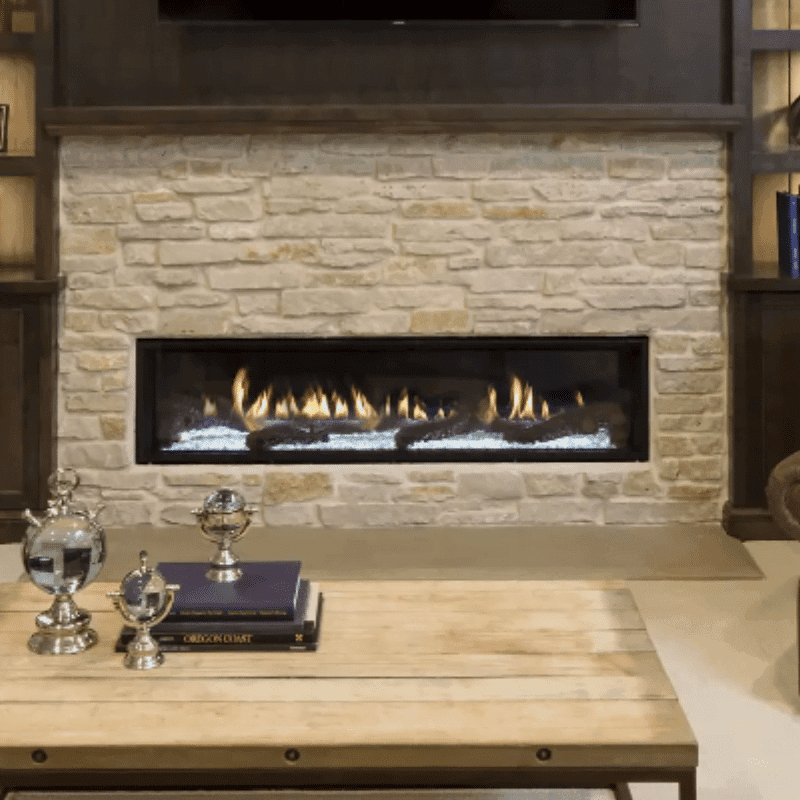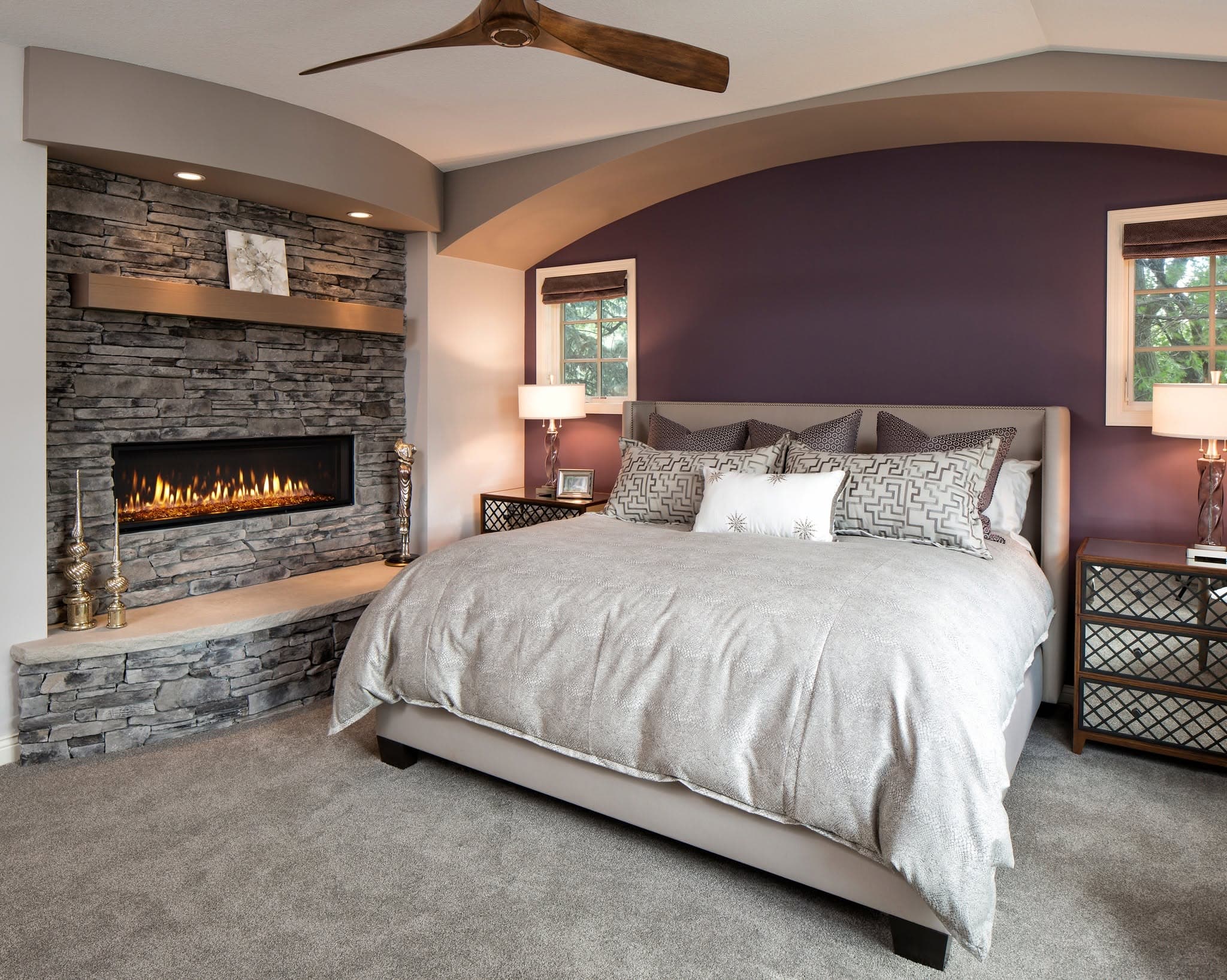

If you have a structurally sound masonry or listed factory-built wood-burning fireplace in a spot you like, a gas insert is usually the simpler upgrade. It fits the existing firebox and vents up the existing chimney. Replace the fireplace instead when you want a different size, style, or location, or when the fireplace cannot safely take an insert.
The right answer depends on four things: what kind of fireplace you have now, the condition of the chimney, how much of the room you want to change, and how much heat you actually want from the fire. Below is how to sort through each one, plus the questions to ask before you buy anything.
What Is the Difference Between a Gas Insert and a New Fireplace?
Heat & Glo defines a fireplace insert as a gas, wood, pellet, or electric appliance that is installed into an existing wood-burning fireplace. A gas insert is a sealed firebox that slides into the opening you already have. The masonry, hearth, and chimney stay, and the insert uses them as its home.
Replacing the fireplace means removing or abandoning the old unit and building in a new one, most often a direct vent gas fireplace. Heat & Glo describes direct vent as a sealed burn chamber where all of the air for the fire comes from outside and all of the exhaust goes back out. A direct vent fireplace does not need a chimney. It can vent through an exterior wall or the roof, which is why it can go in places an insert cannot.
| Question | Gas insert | New gas fireplace |
|---|---|---|
| Needs an existing fireplace? | Yes, a solid fuel masonry or UL 127 listed factory-built fireplace | No |
| How it vents | Up the existing chimney to a cap at the roof | Direct vent pipe through an exterior wall or the roof |
| Location | Stays where the fireplace is now | Can move or be added to a new wall |
| Remodel scope | Usually limited to the opening, front, and surround | Framing, gas, electrical, venting, and finish work |
| Best fit | A sound fireplace you like that sits dark or burns wood | A new look, a new location, or a fireplace that cannot take an insert |
Is Your Existing Fireplace Compatible With a Gas Insert?
Start with what you have. Heat & Glo's Supreme insert installation manual states that its gas inserts are designed for installation into solid fuel masonry fireplaces or UL 127 listed factory-built fireplaces. Those are the two kinds of wood-burning fireplaces you are likely to find in a home, and they are built very differently.
- Masonry fireplace. Built on site from brick, block, or stone, with a masonry chimney. This is the classic case for an insert. Heat & Glo describes inserts as a way to transform inefficient open, masonry-built wood-burning fireplaces.
- Factory-built fireplace. A metal firebox and chimney system built in a factory and framed into the wall. Its make and model are usually on a tag, called the data plate, near the front of the fireplace behind the screen. Heat & Glo's inserts are designed for factory-built fireplaces that are UL 127 listed, so an installer needs that plate to confirm the fit.
- Existing gas fireplace. Heat & Glo defines an insert as going into an existing wood-burning fireplace. If you already have a sealed gas fireplace, the choice is usually between servicing it and replacing it with a new unit.
Size matters too. The manual has the installer determine the minimum fireplace size for the insert before anything is ordered, and confirm that combustible mantel and surround clearances meet the insert's requirements. An opening that is too small, too shallow, or oddly shaped can rule out a model, which is why measuring comes before shopping.
What Condition Does the Chimney Need to Be In?
An insert is only as good as the chimney it vents through. Before installing the insert, the Heat & Glo manual says to make sure the chimney:
- Is constructed of non-combustible materials.
- Is clean and in good working order.
- Has cleanouts that fit properly, so air does not leak into the chimney.
- Has all joints properly engaged and is properly secured.
The firebox itself has to be cleaned of ash, soot, and debris, and the old damper is locked fully open or removed so the vent pipes can pass through.
This is also where an inspection earns its keep. The Chimney Safety Institute of America explains that NFPA 211 defines three levels of chimney inspection, and its Level 2 procedure recommends a Level 2 inspection when the conditions of use are changing, such as adding a new appliance or replacing an existing one with a dissimilar one with a different fuel, efficiency, or type. A Level 2 inspection includes a video scan of the chimney interior. Going from wood to a gas insert is exactly that kind of change. If the inspection finds a chimney that is not sound, the decision may tip toward replacing the fireplace.
How Does a Gas Insert Vent, and What About the Gas Line?
Heat & Glo explains that fireplace inserts can use the existing chimney to vent vertically, terminating at the roof. In the Supreme manual, that means flexible vent pipe running up the chimney, one for exhaust and one for combustion air, ending in a vertical termination cap.
Gas comes next. If there is no gas line at the fireplace yet, one has to be run. The manual says to check local codes and gas line sizing requirements following NFPA 54, the National Fuel Gas Code, and it states that gas line installation and purging must be performed by a qualified installer. The insert also needs power for accessories like a blower, which the manual handles with an outlet in the firebox or a nearby outlet.
One more detail many homeowners miss: an insert is a one-way conversion. The manual requires a permanent label in the firebox stating that the fireplace has been converted for use with a gas insert only and cannot be used for burning wood unless all original parts have been replaced and the fireplace is re-approved by the authority having jurisdiction.
How Big Is the Remodel in Each Case?
This is often the deciding factor, so be honest about what you want.
With an insert, the work centers on the opening. The insert slides in, the vent runs up the chimney, a gas line is brought to the firebox, and a decorative front or surround finishes the face. You keep the existing brick or stone, or refresh it, but the wall itself does not move. Heat & Glo pitches its gas inserts as fitting directly into your existing fireplace, making it functional again for everyday use with the touch of a button.
With a replacement, the scope grows. As our gas fireplace installation page explains, installing a gas fireplace is not a single-trade job. Depending on the unit and your home, it can require framers, finishing carpenters, gas plumbers, and electricians working in sequence. The payoff is freedom: a linear unit, a see-through design, a new location, or a fireplace on a wall that never had one. If you are working with a contractor, talk to them before you buy the fireplace so the scope is quoted correctly from the start.

How Much Heat Do You Need in a Las Vegas Home?
In a desert climate, you may want a fireplace mostly for cool evenings and the look of the fire, not as a primary heat source. Or you may want a fire that really warms the family room. Decide which describes you before you compare models, because it changes the answer.
- An open wood fireplace is a poor heater. The EPA's Burn Wise guidance notes that fireplaces provide less heat to your home, since most of the heat from a fireplace goes out the chimney. Heat & Glo says open, masonry-built wood-burning fireplaces can send as much as 24,000 cubic feet of air per hour outside.
- A gas insert keeps more heat in the room. Heat & Glo says a gas fireplace insert drastically improves the efficiency of your fireplace, keeping heat in your space instead of sending it up the chimney. The EPA notes that gas units burn very cleanly, emitting very little pollution.
- Heat output varies by model and venting. Heat & Glo points out that BTUs relate to how much fuel is burned, but some high BTU models offer mild heat because of their venting configurations. Tell your dealer whether you want a lot of heat or mostly ambiance, and ask about flame size and heat output for each model.
If you want warmth in one room you use every evening, an insert in an existing fireplace can do that without touching the rest of the house. If the fireplace is in a room you rarely use, a replacement in a better location may serve you more. And if you mainly want the look of a gas fire in an existing firebox, ask about gas log sets as a lighter-touch option.
When Does Replacing the Fireplace Make More Sense?
An insert is not always the right call. Replacement is worth a serious look when:
- The existing fireplace is not a masonry fireplace or a UL 127 listed factory-built fireplace, so an insert is not designed for it.
- The chimney inspection turns up problems that make it unsuitable for continued use.
- The opening is too small for an insert that gives you the look or heat you want.
- You want the fire somewhere else, or you want a style an insert cannot give you, such as a wide linear or see-through fireplace.
- You are already remodeling the room, so the framing and finish work is happening anyway.
And an insert usually wins when the fireplace is sound, you like where it is, and you mainly want to stop hauling wood and start enjoying a fire with the push of a button.
What Should You Ask Before You Buy?
Heat & Glo's advice for preparing for a fireplace consultation is simple: bring photos of the space, wide shots and close-ups, plus the existing fireplace measurements if you are upgrading. Then work through these questions:
- What kind of fireplace do I have? Masonry or factory-built, and if factory-built, what does the data plate say?
- Which inserts fit my opening? Ask to see the model's minimum fireplace size and clearance requirements against your measurements.
- Has the chimney been inspected for this change? Ask whether a Level 2 inspection is planned and what happens if it finds a problem.
- Where will the gas line come from? Is there gas at the fireplace now, and who will run and test the line?
- How much heat will this model put out in my room? Ask about flame size, heat output, and whether a blower is included or optional.
- What does the finished face look like? Fronts, surrounds, and whether the existing brick or stone stays.
- Who handles permits and inspection? The Heat & Glo manual says installation must comply with local, regional, state, and national codes, and to consult your local building inspector or authority having jurisdiction about installation inspection and permits.
- Is the installer licensed and trained? Hearth & Home Technologies recommends factory-trained or NFI certified professionals for installation and service.
On that last point, the Nevada State Contractors Board's consumer checklist says to hire only licensed contractors, check the license number with the Board, and get a written contract. Its hiring guide lists a contractor who asks you to obtain building permits yourself as a red flag.
Gas Inserts and Fireplace Replacement in Las Vegas
Hearth and Home Specialties has been licensed since 2000 and is an authorized Heat & Glo dealer. We install gas and electric inserts into existing fireplace openings, and we sell and install gas fireplaces for remodels and new construction, and we handle professional installation and permitting. Our showroom at 3555 W. Quail Ave #A has working displays you can see before you buy. Call (702) 474-4099 or contact us to talk through your fireplace. This guide is general information. Always follow the manufacturer's installation instructions and local codes for your specific home.
Gas Insert vs. Replacement FAQs
Should I replace my fireplace or install a gas insert?
If you have a sound, working wood-burning fireplace you like where it is, a gas insert is usually the simpler path. Replacing the fireplace makes more sense when you want a new size, style, or location, or the existing fireplace cannot take an insert.
Can a gas insert go into any fireplace?
No. Heat & Glo says its gas inserts are designed for solid fuel masonry fireplaces or UL 127 listed factory built fireplaces. The firebox also has to meet the insert's minimum size, and the chimney must be clean, sound, and made of non-combustible materials.
Does a gas insert use my existing chimney?
Yes. Heat & Glo explains that inserts can use the existing chimney to vent vertically, terminating at the roof. In the Supreme insert manual, flexible vent pipes run up the chimney for exhaust and combustion air, ending at a termination cap.
Can I still burn wood after installing a gas insert?
No. The Heat & Glo manual requires a label stating the fireplace has been converted for a gas insert only and cannot burn wood unless all original parts are replaced and the authority having jurisdiction re-approves the fireplace.
Should the chimney be inspected before a gas insert goes in?
Yes. CSIA guidance tied to NFPA 211 recommends a Level 2 inspection when conditions of use change, such as replacing an appliance with one using a different fuel. Heat & Glo also requires the chimney to be clean and in good working order.
Do I need a permit for a gas insert or new fireplace?
Plan on it. Heat & Glo says installation must meet local codes and to consult your building inspector or authority having jurisdiction on inspection and permits. The Nevada State Contractors Board lists a contractor asking you to pull permits as a red flag.
Sources
- Heat & Glo, SUPREME Gas Insert Installation Manual (2532-980 Rev. AM, fireplace types, chimney checks, codes and permits, conversion notice, gas line)
- Heat & Glo, Gas Fireplace Inserts (what an insert is)
- Heat & Glo, Venting for Fireplace Inserts (open masonry fireplaces, venting through the existing chimney)
- Heat & Glo, Deciphering Common Fireplace Terms (insert, direct vent, BTUs and heat output, clearances)
- Heat & Glo, How to Prepare for Your Fireplace Consultation
- U.S. EPA Burn Wise (historic record), Frequent Questions about Wood-Burning Appliances
- Chimney Safety Institute of America, Level 2 Inspection SOP, Masonry Fireplace (NFPA 211 inspection levels)
- Nevada State Contractors Board, Consumer Checklist
- Nevada State Contractors Board, Ready, Set, Hire! (red flags, building permits)