The choice between glass and metal railings comes down to what you want the railing to do. Glass railings use panels of thick tempered or laminated safety glass to guard an edge without blocking the view, for a bright, open, modern look. Metal railings use posts, balusters, pickets, or cables to guard the same edge with a classic, highly durable, and usually lower-cost design. Neither is objectively better. The right one depends on your view, your budget, how much upkeep you want, the style of your home, and where the railing goes.
Both are excellent, code-driven ways to make a staircase, balcony, deck, or loft safe. Below is a plain-English comparison to help you decide, and a look at how a custom glass railing stacks up against the metal options for a Las Vegas home.
What Is the Difference Between Glass and Metal Railings?
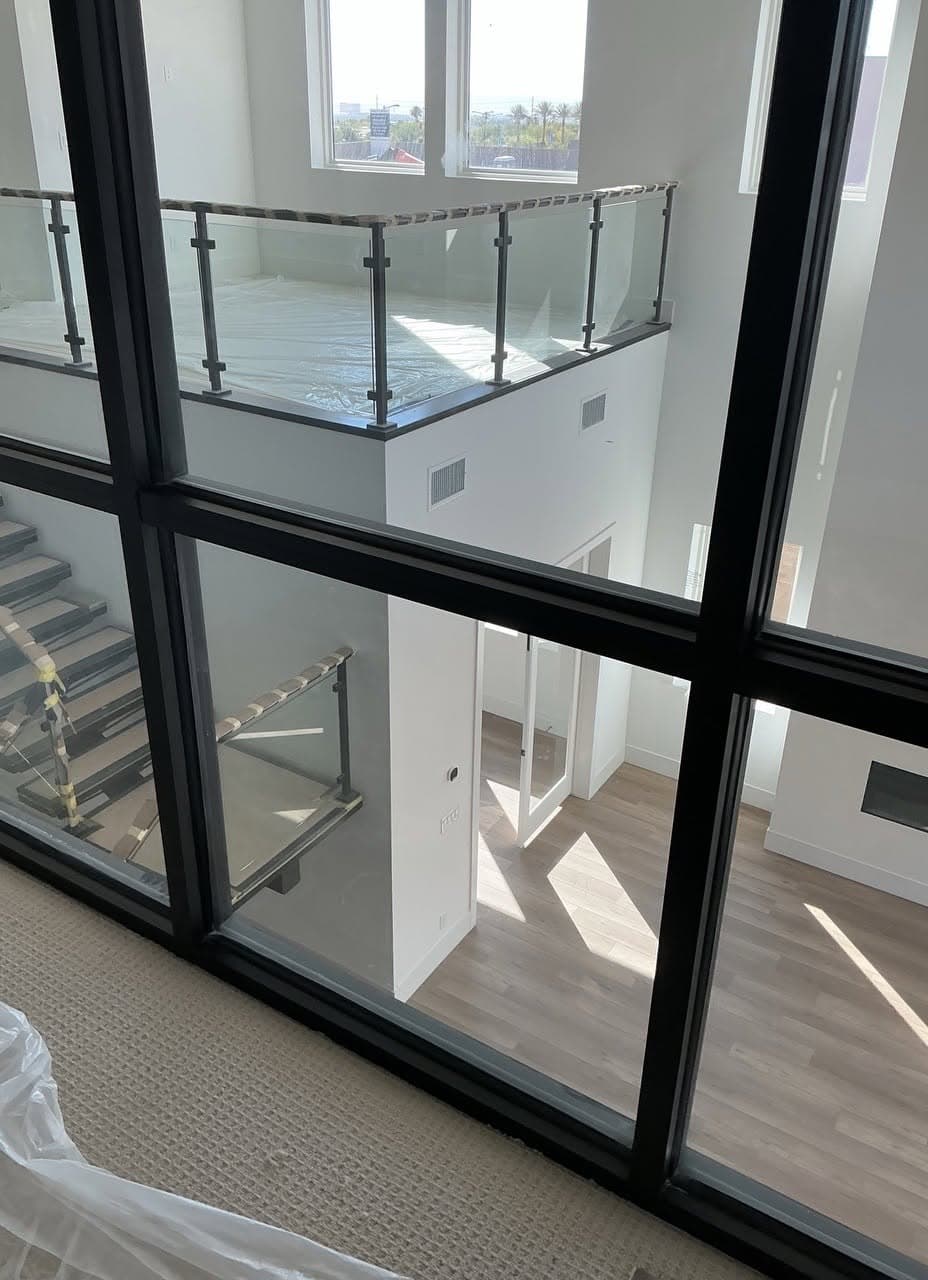
A glass railing is built from tempered or laminated glass panels held by slim hardware, base shoes, standoffs, or posts, so the barrier is there but you can see straight through it. A metal railing is built from a frame of posts and a top rail with vertical balusters or pickets, horizontal cables, or decorative ironwork filling the space between. The core trade is visibility versus material: glass keeps the sight line open, metal puts structure and pattern in the view. Many railings blend the two, using glass infill panels with metal posts and rails.
Glass vs. Metal Railings at a Glance
| Factor | Glass Railings | Metal Railings |
|---|---|---|
| View | Open, unobstructed sight lines | Some material always in the view |
| Style | Modern, minimal, luxury feel | Classic to contemporary, very versatile |
| Cost | Generally higher | Generally lower for standard designs |
| Maintenance | Wipe to keep clear, never rusts | Hides smudges, finish may need upkeep |
| Durability | Very durable safety glass | Extremely durable, especially steel and iron |
| Best for | Views, pools, balconies, lofts | Budget, traditional homes, high traffic |
Glass Railings: Pros and Cons
Glass is the go-to when the view and a clean modern look matter most.
- Unobstructed view: the whole reason to choose glass, it guards the edge without hiding what is behind it.
- Feels open and larger: transparent panels make stairs, decks, and lofts feel more spacious and bright.
- Modern, high-end look: glass reads as a premium, custom upgrade that ages well.
- Never rusts or needs repainting: the glass itself is inert, so there is no corrosion or refinishing.
The trade-offs worth knowing before you commit:
- Higher cost: thick safety glass and precise hardware usually cost more than a standard metal railing.
- Shows spots: fingerprints, dust, and Las Vegas hard water are visible on glass, so it needs regular wiping.
- Precise installation: heavy glass panels have to be measured, engineered, and mounted correctly, which is not a DIY job.
Metal Railings: Pros and Cons
Metal is the workhorse, and it spans a huge range of styles and budgets.
- Lower cost for standard designs: aluminum and steel picket railings are typically the budget-friendly choice.
- Very durable: steel and wrought iron stand up to heavy use, weather, and impacts.
- Style range: from ornate wrought iron to sleek horizontal cable to simple powder-coated pickets.
- Hides everyday smudges: dust and fingerprints are far less noticeable than on glass.
The trade-offs:
- Blocks part of the view: even thin cable or slim pickets place material in the sight line.
- Finish upkeep: painted and iron finishes can chip, corrode, or need refinishing over time, especially outdoors.
- Can feel traditional: depending on the design, metal may read as more classic than modern.
Which Costs More, Glass or Metal?
As a rule, a glass railing costs more than a comparable basic metal railing, because the safety glass, the standoffs or channels, and the careful installation add up. But the ranges overlap: an ornate wrought iron or a premium designer metal railing can cost as much as or more than a simple glass panel system. Cost is driven by the material and finish, the length and layout of the run, indoor versus outdoor conditions, and whether the design is standard or fully custom. The only reliable way to compare is a measured quote for your actual stairs, deck, or balcony.
Which Is Safer, and Do They Meet Code?
Both are safe when engineered and installed to code, and both are held to the same guard requirements. Guardrails generally need to be about 42 inches tall for many residential settings and must resist a required load, and glass used in a guard must be safety glazing, meaning tempered or laminated glass. Tempered glass breaks into small blunt pieces if it ever fails, and laminated glass holds together on a plastic interlayer. The exact height, spacing, load, and glass rules are set by the building code your local inspector enforces, so the right move is to have the railing designed to your jurisdiction and confirmed before install. That is a strong reason to use a professional custom glass service rather than an off-the-shelf kit.
Which Railing Is Right for Your Home?
Choose glass if you have a view worth keeping, a balcony or pool deck, or a modern staircase where openness and light are the priority, and you do not mind wiping the panels to keep them clear. Choose metal if you want the most budget-friendly durable option, a traditional or high-traffic setting, or a specific wrought iron or cable look. And remember you do not have to pick just one: a glass and metal combination, glass infill with metal posts and rails, is one of the most popular choices because it blends an open view with structure and matches metal finishes already in the home.
Hearth and Home Specialties designs, fabricates, and installs custom glass railings across the Las Vegas valley, and can help you weigh glass against metal for your exact space, style, and budget. Explore our custom glass and mirror services or contact us for a free estimate.
Frequently Asked Questions
Are glass railings more expensive than metal railings?
Usually, yes. A glass railing uses thick tempered or laminated safety glass, specialized standoffs or channels, and precise installation, so it typically costs more than a basic aluminum or steel picket railing. That said, ornate wrought iron and high-end metal designs can close the gap or cost more than a simple glass panel system. The real number depends on the material, the finish, the length of the run, and whether the layout is standard or custom, so a measured quote is the reliable way to compare.
Do glass railings meet building code?
Yes, when they are built and installed correctly. Guardrails are generally required to be about 42 inches tall for many residential applications and must resist a required load, and glass used in a guard must be safety glazing, meaning tempered or laminated glass. The specific height, load, and glass requirements come from the building code your local inspector enforces, so the safe path is to have a professional design the railing to your jurisdiction's code and confirm the details before installation.
Which railing is easier to maintain, glass or metal?
They are easy in different ways. Glass shows fingerprints, dust, and hard water spots, which are very visible in Las Vegas, so it needs regular wiping to stay clear, but it never rusts or needs repainting. Metal hides smudges better and shrugs off dust, but painted or iron finishes can eventually chip, corrode, or need refinishing, especially outdoors. Powder-coated aluminum is the lowest-maintenance metal option.
Are glass railings safe?
Yes. Glass railings are built from tempered or laminated safety glass engineered to handle the required guard loads, and if tempered glass ever breaks it crumbles into small blunt pieces rather than sharp shards. Laminated glass adds a plastic interlayer that holds the panel together if it cracks. As with any guardrail, safety comes down to correct engineering, quality hardware, and professional installation.
Which railing is better for a home with a view?
Glass. The entire point of a glass railing is that it protects an edge without blocking sight lines, so it is the clear choice for a balcony, a pool deck, a loft, or any staircase where you want to keep the view and the sense of open space. Metal railings, even thin cable or slim pickets, always place some material in the line of sight.
Can glass and metal railings be combined?
Absolutely, and it is a popular look. Many railings pair glass infill panels with metal posts, top rails, or standoffs, which blends the open view of glass with the structure and warmth of metal. It is a flexible way to get a modern feel while matching existing metal finishes elsewhere in the home.