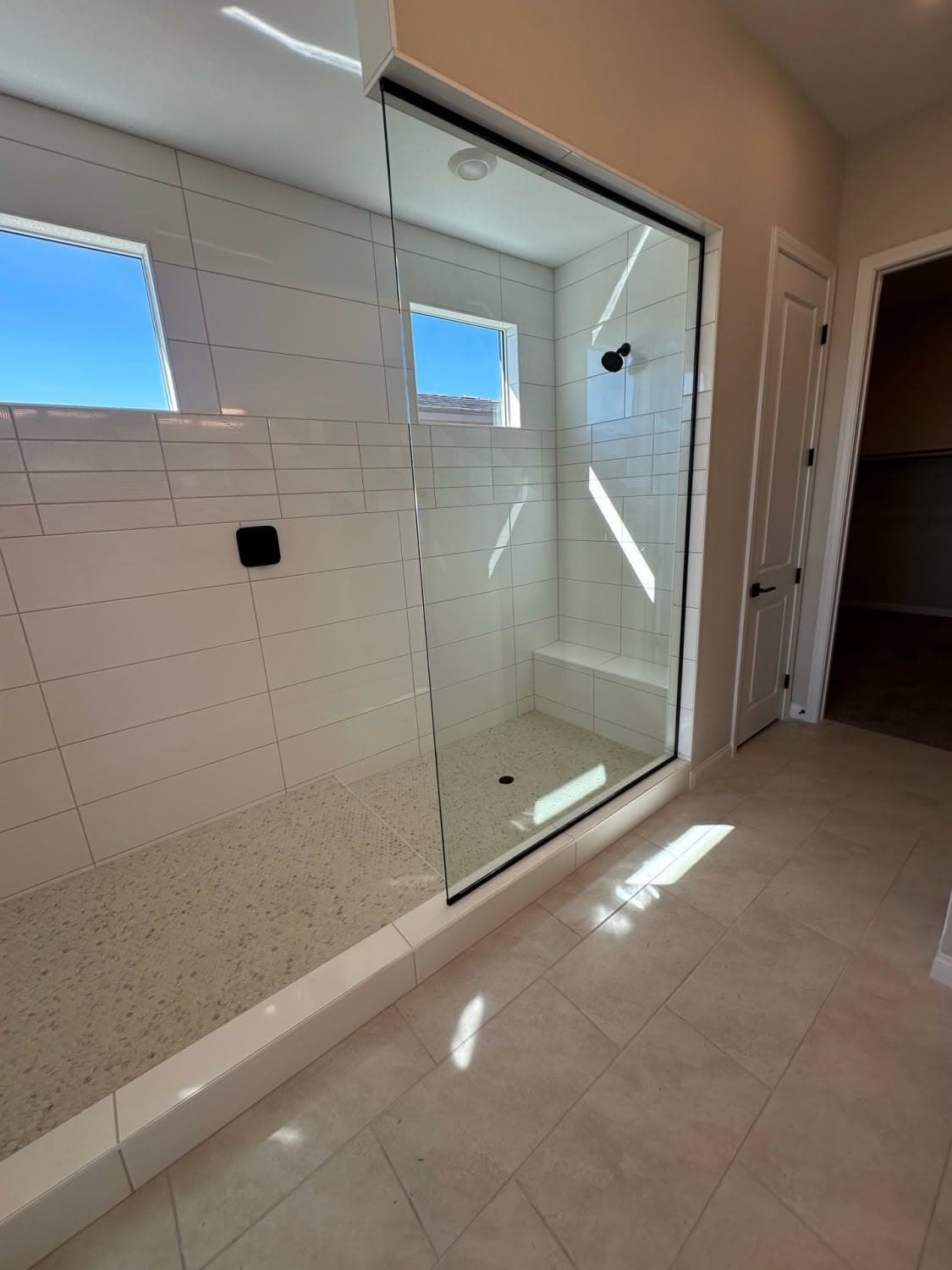
To clean and care for a glass shower enclosure, squeegee the glass after every shower, clean it weekly with a gentle, non-abrasive cleaner and a soft cloth, and treat hard water spots before they build up. Skip scouring pads and harsh chemicals, wipe down hinges and seals, and call a professional for etching, leaks, or loose hardware.
Glass is easy to live with, as long as you stay ahead of water spots and soap residue. That matters even more in Las Vegas, where hard water is common across the valley and minerals are quick to leave their mark. Here is a simple routine that keeps a custom glass shower enclosure looking clear for years.
Why Does Shower Glass Get Cloudy?
Most cloudiness comes from two things: soap scum and minerals. Every time water dries on the glass, it leaves behind whatever was dissolved in it. Hard water carries more minerals, so those spots show up faster and bond more firmly the longer they sit. Soap and body products add a film on top. Left alone, that combination builds into a haze that gets harder to remove, and over time mineral deposits can begin to etch the glass itself.
What Is the Best Daily Routine for Glass Shower Doors?
The single most effective habit is a squeegee after every shower. It takes less than a minute, and it removes the water before minerals have a chance to dry on the glass. Work from top to bottom in overlapping strokes, then wipe the bottom edge and any hardware with a dry microfiber towel. Leaving the door open or running the bathroom fan afterward helps the enclosure dry out, which also discourages mildew around the seals.
How Should You Clean Shower Glass Each Week?
Once a week, give the enclosure a proper cleaning. Spray the glass with a mild, non-abrasive cleaner, or a little dish soap in warm water, and wipe it with a soft cloth or a non-scratch sponge. Rinse thoroughly with clean water so no residue is left behind, then squeegee and dry. For spots that did not come off, a diluted white vinegar solution can loosen mineral buildup. Let it sit briefly, wipe, and rinse well. Keep vinegar and other acidic cleaners away from natural stone surfaces, and rinse metal hardware afterward.
What Should You Never Use on Shower Glass?
These do more harm than good:
- Abrasive powders, scouring pads, and steel wool, which can leave fine scratches in the glass.
- Razor blades or scrapers, which can scratch glass and strip a protective coating.
- Harsh chemicals and strong acids on hinges, handles, and clamps, which can dull or damage the finish.
- Mixing cleaning products, especially anything with bleach, which is unsafe as well as hard on seals.
- Solvent-based cleaners on rubber or vinyl seals and sweeps, which can dry them out and cause them to crack.
How Do You Deal With Las Vegas Hard Water?
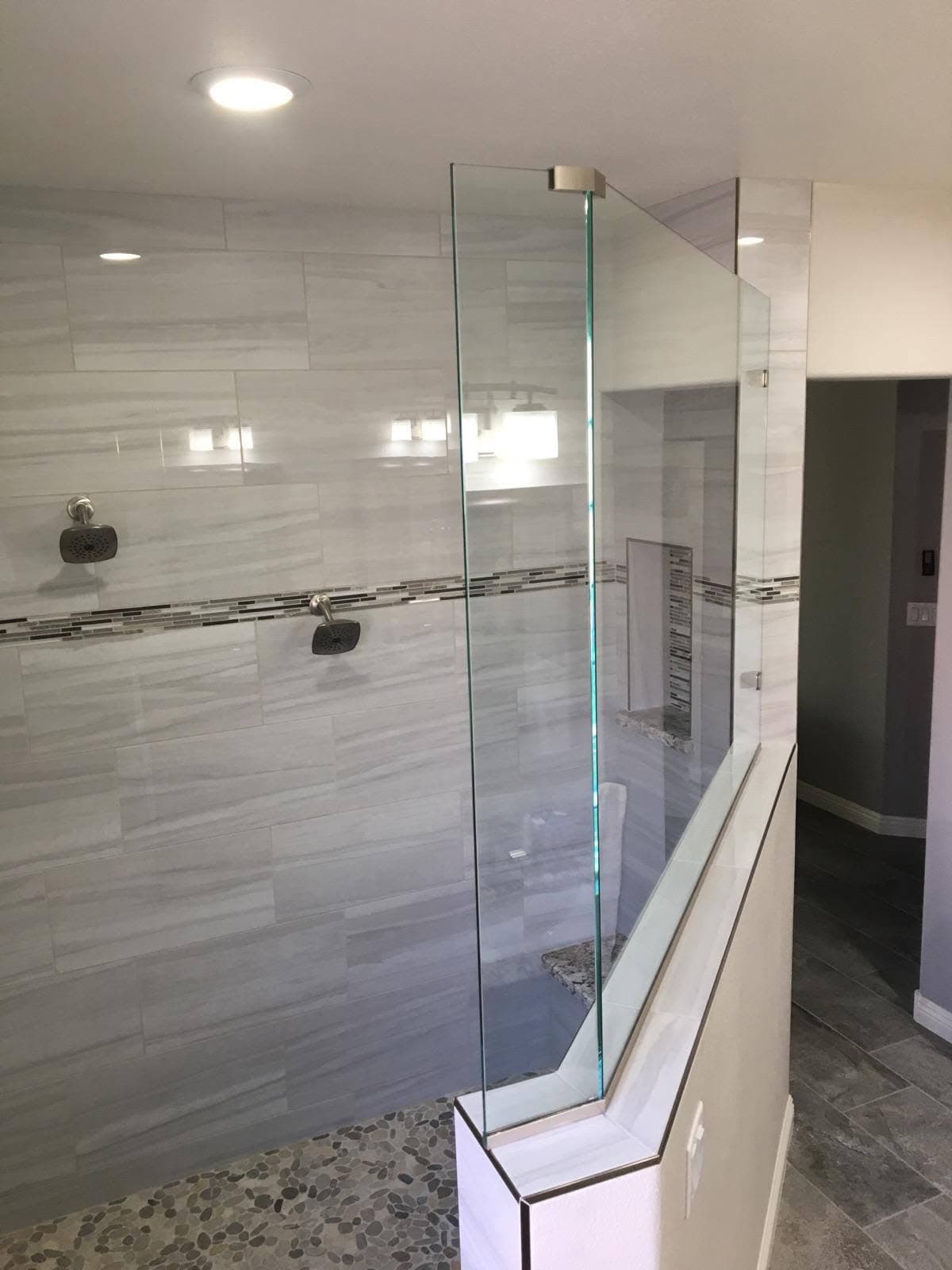
Consistency matters more than strength: a daily squeegee and a weekly gentle clean prevent most buildup, while a strong cleaner used once a month has to fight deposits that have already bonded. A water softener can also reduce spotting. If you are choosing a new enclosure, the design matters too. Glass with fewer metal tracks and channels leaves fewer places for minerals to collect, which is one reason homeowners ask what a frameless shower enclosure is and whether it is easier to keep clean.
Are Protective Glass Coatings Worth Considering?
A protective coating is an option many homeowners like, especially in hard water areas. These treatments make the glass surface smoother so water beads up and runs off instead of clinging, which can mean fewer spots and faster cleaning. A coating is not a substitute for the daily squeegee, and many need to be reapplied over time. If your glass has a coating, follow the care instructions for that product and stick with gentle cleaners so you do not wear it away.
How Do You Care for Hinges, Seals, and Hardware?
During your weekly clean, wipe hinges, handles, and clamps with a soft cloth and mild soap, rinse, and dry them so water does not sit on the finish. Check the vinyl seals and bottom sweep for discoloration, cracking, or gaps, since worn seals are a common cause of leaks. Open and close the door: one that sags, drags, or feels loose at the hinge should be looked at.
When Should You Call a Professional?
Some problems are best left to a glass professional. Call for help if you see:
- Cloudiness that will not come off after careful cleaning, which may be etching.
- Water escaping around the door because seals or sweeps have failed.
- Loose, stiff, or corroded hinges, clamps, or handles.
- A door that sags, rubs, or will not close properly.
- Any chip or crack in the glass.
- Glass that is damaged or worn enough that replacing the enclosure makes more sense.
Hearth and Home Specialties designs, fabricates, and installs custom glass shower enclosures across the Las Vegas valley, and handles hardware replacement and enclosure replacement too. If your shower glass is past the point of cleaning, contact us for a free estimate.
Frequently Asked Questions
How often should I clean a glass shower enclosure?
Squeegee the glass after every shower and give it a gentle full cleaning about once a week. The daily squeegee removes water before minerals and soap residue dry on the glass, and the weekly clean handles what it missed, plus the hardware and seals.
What is the best way to remove hard water spots from shower glass?
Start with a mild cleaner and a soft cloth. For stubborn spots, a diluted white vinegar solution left on for a few minutes and rinsed off usually loosens mineral buildup. Keep acidic cleaners off natural stone and rinse hardware afterward.
What should I avoid using on a glass shower door?
Avoid abrasive powders, scouring pads, steel wool, and razor scraping, which can scratch the glass or strip a coating. Avoid harsh chemicals and strong acids on hardware and seals, since they can damage finishes and break down rubber and vinyl.
Are protective coatings for shower glass worth it?
In hard water areas, many homeowners find them helpful. A coating helps water bead and sheet off, which can reduce spotting and speed up cleaning. It does not replace the squeegee, and some coatings need to be reapplied over time.
How do I know if my shower glass is etched instead of dirty?
Deposits sit on top of the glass and come off with the right cleaner. Etching is damage to the surface itself, so the glass stays cloudy after a thorough cleaning. If the haze never changes, have a glass professional take a look.
When should I call a professional about my shower enclosure?
Call a pro for cloudiness that will not clean off, leaks from failed seals, loose hinges or clamps, a door that sags or will not close properly, or any chip or crack in the glass. Loose hardware on heavy glass should not wait.