Automatic doors should get a safety check every day and a full inspection at least once a year. The industry standard, set by the American Association of Automatic Door Manufacturers (AAADM), is a daily walk test by the owner or staff, an inspection right after installation, and an annual inspection by an AAADM certified inspector.
Those intervals are the minimum. Your door manufacturer, your insurance carrier, or the local authority having jurisdiction (AHJ) can ask for more, and a door that has been hit, repaired, or adjusted should be checked again before it goes back into service.
How Often Should Automatic Doors Be Inspected?
AAADM states that automatic doors that are properly installed, inspected annually by AAADM certified inspectors, and safety checked daily by premise owners consistently provide safe access. Combined with the checks that come with normal service, the schedule looks like this:
| When | Who does it | What it covers |
|---|---|---|
| Every day, before the door is used | The owner, manager, or trained staff | The AAADM daily safety check: sensors, opening, hold open, closing, and safety zones |
| Right after installation | An AAADM certified inspector | Full compliance inspection of the new door against the applicable ANSI/BHMA standard |
| At least once a year | An AAADM certified inspector | Annual compliance inspection, documented on an inspection form and a compliance label on the door |
| On every service call | The AAADM certified technician doing the work | A safety check before the door is returned to service |
| After any impact, failure, or adjustment | A qualified automatic door technician | Inspection and repair before the door is used again |
The annual inspection is a recommendation from AAADM, which says in its guidance on certified inspectors that it recommends an inspection of all automatic doors immediately following installation and annually thereafter. Busy entrances such as casinos, hospitals, and grocery stores put far more cycles on a door than a small office, so many owners pair the annual inspection with more frequent preventive maintenance set up with their service provider.
What Is the Automatic Door Daily Safety Check?
The daily safety check is a short walk test the owner does before the door sees traffic. AAADM's daily safety check instructions cover the sensors and safety devices. In plain language:
- Walk toward the door. Approach at a moderate speed from several angles. The door should start opening as you approach, move smoothly, and stop without impact.
- Slow down in the doorway. As you move slowly toward and through the opening, the door should stay open.
- Check both sides. For doors that handle two way traffic, repeat the test from the other side.
- Step away. Leave the sensor zone or step off the mat. After a brief delay, the door should close.
- Test the swing door safety zone. On swinging doors, stand on the safety side while someone approaches the activating side. As long as you are in the safety area, the door should not open toward you.
- Test holding beams and other safety devices. If the door has electronic holding beams, block each one with your hand and stand still for several seconds; the door should stay open. If other safety devices are used, crouch motionless in the opening for ten seconds; the door should not close.
Use caution while testing, and keep the doorway clear of carts and customers. AAADM's owner guidance also suggests looking over the area for tripping or slipping hazards, checking door panels for damage, and making sure hardware and overhead covers are secure. If the door does anything unexpected, take it out of service and call a technician.
Who Is Responsible for Automatic Door Safety?
The owner. AAADM puts it directly: it is the owner's or caretaker's responsibility to inspect the operation of the door system daily to make sure it is safe for customers, employees, and visitors. If the door fails the daily check, AAADM says not to repair or adjust it yourself. Discontinue use, secure the door in a safe manner, and call an AAADM certified technician.
AAADM also lists what an automatic door supplier should leave with the owner for each door:
- Instruction on how to do the daily safety check, by walk through example.
- The location of the function switches and how to use them.
- The circuit breaker or main power disconnect location for each door.
- An AAADM inspection form or a work order signed by an AAADM certified inspector.
- A completed annual compliance inspection label at the bottom of the safety information label on the door.
- Warranty information and a number to call for service.
If you manage a building and cannot find a current inspection label or signed form for each automatic door, that is a sign the annual inspection has lapsed.
Which ANSI/BHMA Standards Apply to Automatic Doors?
Automatic pedestrian doors are built and inspected to standards from the Builders Hardware Manufacturers Association (BHMA), accredited by the American National Standards Institute (ANSI). Which one applies depends on how the door operates:
- ANSI/BHMA A156.10, Power Operated Pedestrian Doors. Full power swinging, sliding, and folding doors that open automatically when approached, usually through a motion sensor. This is the standard most people picture at a store or hotel entrance.
- ANSI/BHMA A156.19, Power Assist and Low Energy Power Operated Doors. Swinging doors that move slowly with low power. Low energy doors open on a knowing act, such as a push plate, touchless switch, or access reader, while power assist doors open by hand with reduced force.
- ANSI/BHMA A156.38. Low energy power operated sliding doors and low energy power operated folding doors.
According to AAADM's overview of A156.10, the standard contains performance tests and dimensional requirements intended to reduce the chance of injury, and ANSI requires each standard to be reaffirmed, revised, or withdrawn within five years. Requirements change between editions. The 2017 edition of A156.10, for example, added a requirement that the door control verify its presence sensors are working and communicating, and stop operating automatically until a detected fault is corrected, according to iDigHardware's summary of the 2017 changes. An annual inspection is a chance to learn which changes affect an older door.
These are often called voluntary standards, but AAADM notes that building codes and other bodies frequently expect compliance with them, and that products should be installed according to the manufacturer's written instructions, which incorporate the standard's criteria.
What Does an Annual Automatic Door Inspection Cover?
The inspector checks the door against the ANSI/BHMA standard for its type, adjusts what can be adjusted, and documents the result. As one example of what that looks like in the field, STANLEY Access Technologies publishes a 14 point inspection for swing and sliding doors. Its swing door list includes:
- Door panels, frames, pivots, guide rails, and glass.
- Arms and linkages, inspected and calibrated.
- The operator in open, close, emergency, and breakout functions.
- Finger guards and the door lock assembly.
- Control box settings.
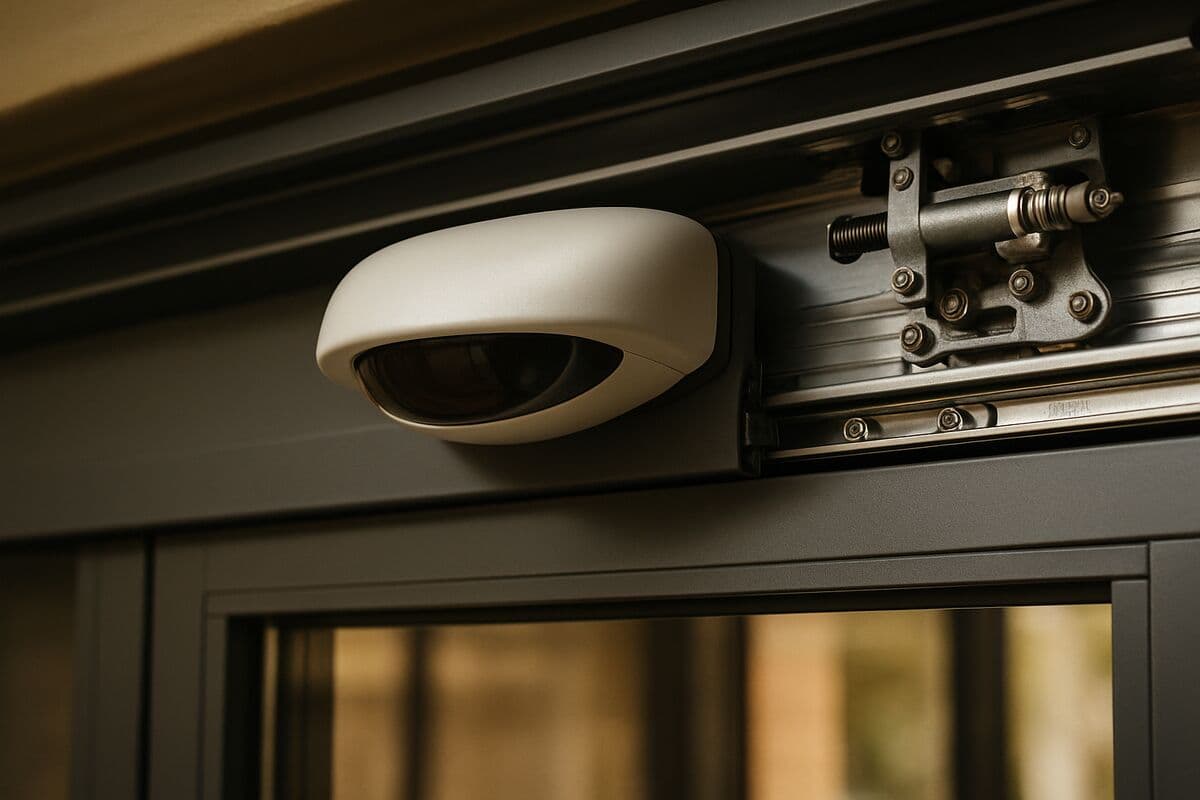
- The safety sensor system and the detection area, inspected and calibrated.
- Door safety decals.
- Floor switch mats and trim.
- Cleaning and lubrication as needed.
Signage is part of compliance, not decoration. AAADM's owner guidance says doors need decals visible from either side explaining how the door works, mounted 50 inches, plus or minus 12 inches, from the floor to the center of the decal. Low energy doors carry a yellow "Automatic Caution Door" sign, and motion activated doors are labeled "Push to Operate" and "Pull to Operate" on the matching sides. Faded, missing, or painted over decals are an easy fix and a common finding.
Who Can Perform an Automatic Door Inspection?
AAADM recommends an AAADM certified inspector. To earn certification, an inspector studies the standards and AAADM training materials, attends a two day course with hands-on training, and passes an exam. Certification is not permanent. Per AAADM's recertification rules, every certified inspector must renew annually, and for 2026 that includes passing an online renewal test.
Before an inspection, ask the service company for the inspector's current AAADM certification, and make sure you will receive a signed inspection form and a new compliance label for each door. The form is your record if the door is ever questioned after an incident.
Do Building and Fire Codes Require Automatic Door Inspections?
Codes set the rules automatic doors must meet. Whether a code also sets an inspection schedule depends on which codes your jurisdiction enforces and how your building is used. Here is what we could confirm from primary and industry sources:
- International Building Code. Section 1010.3.2 of the 2021 IBC, Power-Operated Doors, requires automatic swinging, sliding, and folding doors to comply with A156.10, A156.19, or A156.38, per iDigHardware's code FAQ on automatic sliding doors. The 2021 IBC also added Section 1105.1.1, which requires certain public entrances to have at least one power operated or low energy door, according to AAADM's IBC adoption tracker.
- NFPA 101, Life Safety Code. Section 7.2.1.9 covers powered door leaf operation, including breakaway requirements for doors in the means of egress. Where an occupancy chapter calls for it, NFPA 101 requires certain egress doors to be inspected and tested at least annually by a qualified person, with a signed written record, and one item on that inspection is that powered doors operate in accordance with 7.2.1.9, as iDigHardware explains in its NFPA 101 guide.
- The ADA. The 2010 ADA Standards, Section 404.3, require full powered automatic doors to comply with A156.10 and low energy and power assisted doors to comply with A156.19, with a clear opening of 32 inches minimum in power on and power off mode. Separately, 28 CFR 36.211 requires public accommodations to keep accessible features in operable working condition, with an allowance for isolated or temporary interruptions for maintenance or repairs.
In Southern Nevada, Clark County, the City of Las Vegas, Henderson, and North Las Vegas each adopt and amend their own building and fire codes, so the edition and any local requirements vary by address. We did not find a Nevada or Clark County rule that sets a specific inspection interval for automatic doors, so treat the AAADM schedule as the industry standard and ask your building official or fire marshal whether anything more applies. If your automatic door is also a fire door, it has its own annual inspection under NFPA 80, covered in our guide to fire door inspection requirements in Las Vegas.
What Are Common Reasons Automatic Doors Fail Inspection?
Most findings trace back to the items on the daily check and the inspection list above. The ones owners can often spot before the inspector arrives:
- A sensor that opens the door late, or a door that starts to close while someone is still in the opening.
- Missing, faded, or unreadable safety decals, or no current inspection label.
- Loose pivots or play between the door and the operator when the lock stile is moved by hand.
- Damaged panels, cracked glass, or overhead covers that are not secured.
- A breakout or emergency function that does not work as designed.
- Worn or damaged floor mats and threshold trim that create a trip hazard.
None of these should be adjusted by building staff. Operator speeds, forces, timing, and sensor patterns are set to the standard during inspection and service, and changing them without the right training and tools can take the door out of compliance.
Automatic Door Inspection and Repair in Las Vegas and Henderson
Hearth and Home Specialties works with property managers, building owners, and businesses across the Las Vegas valley. Our AAADM certified technicians provide inspections, sensor testing, and operator repair for pedestrian automatic doors. Learn more about our automatic door service in Las Vegas or our broader commercial door repair work.
To schedule an automatic door inspection or request a repair, call (702) 474-4099 or submit a service request online. This guide is general information. Your door manufacturer and your local authority having jurisdiction have the final word on what applies to your building.
Automatic Door Inspection FAQs
How often should automatic doors be inspected?
Every day by the owner or staff, using the AAADM daily safety check, and at least once a year by an AAADM certified inspector. AAADM also recommends an inspection right after installation. Your manufacturer or local authority may require more.
Is an annual automatic door inspection required by law?
The annual inspection is an industry recommendation from AAADM, not a universal law. Building codes require automatic doors to meet ANSI/BHMA standards, NFPA 101 requires annual egress door inspections in some occupancies, and the ADA requires accessible features to stay working.
Who can inspect an automatic door?
AAADM recommends an AAADM certified inspector. Certification requires a two day course with hands-on training and a passing exam, and inspectors must renew with AAADM every year. Ask to see a current certification before the inspection.
What is the automatic door daily safety check?
A quick walk test the owner does each day. Approach the door from different angles, confirm it opens smoothly and stays open while you are in the doorway, then step away and confirm it closes after a short delay without striking anyone.
What should I do if my automatic door fails the daily check?
Stop using the door and secure it safely, for example by switching it off or locking it per your posted procedure. Do not try to adjust or repair it yourself. Call an AAADM certified technician to inspect and repair the door.
Which ANSI standards apply to automatic doors?
ANSI/BHMA A156.10 covers full power operated pedestrian doors. A156.19 covers power assist and low energy power operated doors. A156.38 covers low energy power operated sliding and folding doors. Building codes point to these standards.
Sources
- AAADM, American Association of Automatic Door Manufacturers (home page)
- AAADM, Daily Safety Check
- AAADM, Why Use Certified Inspectors
- AAADM, Liability and Signage
- AAADM, Technical Bulletin 105: An Overview of the ANSI/BHMA A156.10 Standard
- AAADM, Technical Bulletin 104: What Is a "Voluntary Standard"?
- AAADM, Recertification
- AAADM, IBC Adoption Tracker
- iDigHardware, Decoded: New Requirements for Pedestrian Automatic Door Operators and Sensors
- iDigHardware, FAQs About Automatic Sliding Doors
- iDigHardware, Decoded: Annual Inspection of Egress Doors
- U.S. Access Board, 2010 ADA Standards, 404.3 Automatic and Power-Assisted Doors and Gates
- 28 CFR 36.211, Maintenance of Accessible Features (Cornell LII)
- STANLEY Access Technologies, 14-Point Inspections