A commercial roll-up door that will not open or close usually has one of five problems: a safety sensor or photo eye that is blocked or out of line, an operator or limit setting that is off, a counterbalance spring that has lost tension or broken, a curtain binding in a bent guide, or a damaged bottom bar. Staff can check the first two safely. Springs and repairs need a trained technician.
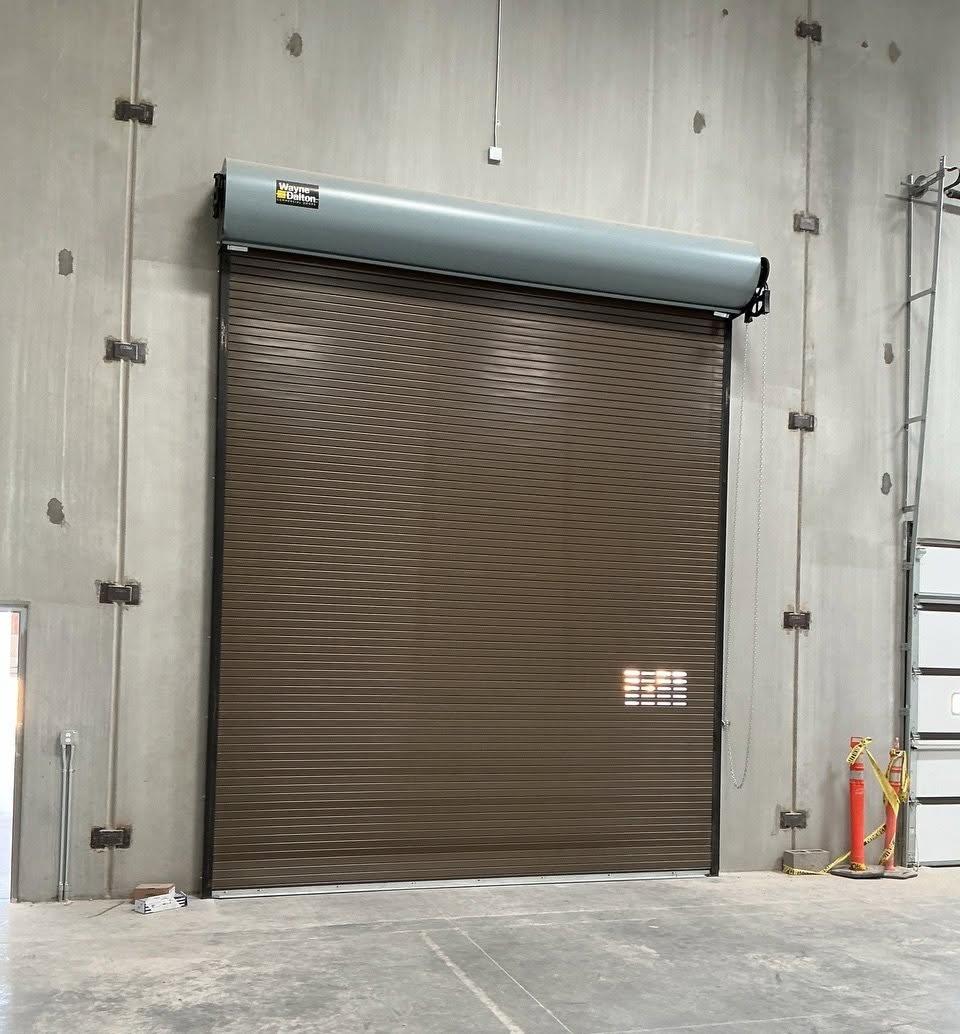
A stuck door at a loading dock or storefront stops deliveries, traps inventory, and can leave a building unsecured overnight, so it helps to know what you are looking at before you call. This guide walks through common symptoms on rolling steel doors around the Las Vegas valley, what each one usually means, and where the line is between a safe check and a job for a technician. If you are new to these doors, our post on what a commercial rollup door is explains the parts: the curtain of interlocking slats, the barrel and springs above the opening, the guides on each side, and the bottom bar.
What Should You Check First?
Start with the symptom. Each row has its own section below.
| Symptom | Likely cause | Safe first check |
|---|---|---|
| Will not close, or only closes while you hold the button | Photo eye or sensing edge not working | Clear and wipe the photo eyes, check they face each other |
| Stops or reverses on the way down | Safety device tripping, limit setting, binding | Look for anything in the opening or the guides |
| Hard to open by chain or crank | Counterbalance spring out of balance | None. Call for service |
| Will not stay open, drifts down | Counterbalance problem | Keep people clear. Call for service |
| Motor runs, door does not move | Drive chain, gears, or operator | Note any sounds. Call for service |
| Rubbing, grinding, or jerky travel | Bent guide, worn bearing, curtain rubbing | Look at the guides with the door stopped |
Why Won't My Roll-Up Door Close?
On an electric door, the most common reason is the safety system doing its job. Commercial door operators use entrapment protection, usually a pair of photoelectric eyes across the opening or a sensing edge along the bottom bar, to stop or reverse the door if something is in the way. When those devices are blocked, dirty, knocked out of line, or not working, the door will not close normally.
The Door and Access Systems Manufacturers Association (DASMA), the trade group for door and operator manufacturers, notes in its rolling door maintenance guide that under UL 325, the safety standard for door operators, a door with no working sensing edge or photo eyes requires constant pressure on the close button. In practice, that is the classic symptom: the door only goes down while someone holds the button, and stops when they let go.
What staff can safely check:
- Clear the opening. Pallets, debris, or a cart edge in the opening will stop the door, which is what it should do.
- Wipe the photo eyes. Dust and grime on the lenses can block the beam.
- Check alignment. The two eyes should face each other. A forklift bump can knock one out of line, and many units have an indicator light that changes when they are aligned.
- Look at the bottom bar. A bent bar or a torn sensing edge can stop the door or keep it from sealing at the floor.
Do not bypass, tape over, or disconnect a safety device to get the door closed. If the door still will not close normally after these checks, the sensing system or operator needs a technician. DASMA also recommends testing a door's sensing devices at least weekly, at both ends of a sensing edge, so problems show up before the day the door will not close.
Why Is My Roll-Up Door Hard to Open, or Won't It Stay Up?
Above the opening, a rolling door has a barrel with torsion springs inside. Those springs counterbalance the weight of the curtain, so a person or a motor only has to move a small part of it. When the spring tension is off, everything about the door feels wrong: it is heavy to lift, the motor strains, or the door creeps down after it is opened.
DASMA gives building staff a few simple signs to watch for:
- It should stay open on its own. DASMA says to call for service if a door must be propped open.
- It should be easy near the top and bottom. A rolling door normally takes more force through the middle of its travel, but not at the ends.
- Manual force has limits. Force to open the door should not exceed 35 pounds on a hand chain or 25 pounds on a crank. Much more than that may mean a counterbalance problem that needs a trained door systems technician.
- A straining motor is a clue. For electric doors that sound like they are laboring, DASMA suggests closing the door with the operator, switching to manual operation, and opening it by hand. If it takes too much force, call for service and ask for a spring counterbalance evaluation.
Janus International, a rolling door manufacturer, sums up the balance check simply: if the door is easy to close but hard to open, the spring tension should be increased, and if it is easy to open but hard to close, the tension should be decreased. Janus directs that adjustment to qualified personnel.
Never adjust the springs yourself
This is the one hard rule. DASMA warns that tension headplate brackets and counterbalance assemblies are under extreme spring tension and could result in death or serious injury. Its guidance to building staff is not to try to adjust the tension wheel and to call for service. It also lists one sign to watch while the door runs: the tension wheel and its shaft should not turn during operation. If they do, stop using the door and call. DASMA's installation guidance adds that rolling steel doors are intended to be installed and serviced only by trained door systems technicians.
Why Does the Door Stop Partway or Reverse?
A door that starts down and then stops or goes back up is usually reacting to one of three things:
- A safety device. A photo eye that flickers in and out of alignment, or a sensing edge that is damaged, can trigger a reverse even when nothing is in the way.
- Limit settings. The operator's limits tell it where open and closed are. DASMA says limits should be set so the bottom bar does not jam tight against the stops at the top and the curtain does not sag when closed. Limits that drift can make the door stop short or overrun.
- Binding. If the curtain or bottom bar drags in a guide, the operator may stop to protect itself.
If clearing and wiping the photo eyes does not fix it, limits and operator settings are a job for the technician, because the settings depend on the operator model and the door.
Why Is It Noisy, Jerky, or Rubbing?
New noises are worth taking seriously, because they often come before a door stops working. With the door stopped and nobody under it, look for these problems from DASMA's maintenance checklist:
- Guides. The gap should be even from top to bottom, and a bent guide must not bind the curtain or bottom bar. Dock doors can take hits from forklifts and pallet jacks, which can bend a guide.
- Curtain rubbing. The curtain and bottom bar should move freely and not rub against the header or the opening in the ceiling. Call for service if the curtain endlocks rub against the headplate bracket.
- Endlocks and windlocks. These small pieces on the ends of the slats keep the curtain in the guides. They must stay securely fastened.
- Bearings. Call for service if a bearing looks or sounds worn or damaged.
- Hood. If the door has a hood over the coil, it must be secure and must not bind against the curtain.
Dock doors in particular get heavy daily use. If you also have dock levelers and seals at the same openings, our page on dock door repair covers how we handle the whole loading dock in one visit.
What About Chain and Crank Doors?
Manual roll-up doors fail in the same ways, and you can feel the problem directly. If the chain or crank suddenly takes far more effort, treat it as a counterbalance problem and stop forcing it. DASMA's checklist also covers the drive parts: on gear-operated doors, look for broken teeth and debris, and on sprocket and roller chain drives, check the chain for damage and wear. Its guidance includes cleaning and lubricating gears and chains, which is routine maintenance best left to the scheduled service visit unless your manufacturer's instructions say otherwise.
What Can Staff Do Safely, and When Should You Call?
Safe for building staff:
- Keep the opening and the guides clear.
- Wipe and check the alignment of the photo eyes.
- Test the safety devices weekly, the way DASMA recommends.
- Watch and listen as the door runs, and note what changed and when.
- Keep the product safety labels clean and readable.
Call a technician and stop using the door if:
- The door will not stay open, drifts down, or has to be propped.
- It is much harder to open by hand than it used to be.
- You hear a loud bang from the coil area, or see a spring that looks broken or a tension wheel that turns while the door runs.
- A guide is bent, the curtain is off track, or slats are damaged.
- The door will only close with the button held down.
Rolling fire doors have their own inspection and testing requirements under NFPA 80, and a fire door that will not close is a life safety problem, not just an inconvenience. Our guide to fire door inspection requirements in Las Vegas covers what inspectors look for.
Should You Repair or Replace the Door?
Most of the problems in this guide are repairs: realigning or replacing photo eyes, resetting limits, rebalancing or replacing springs, straightening or replacing a guide, or replacing damaged slats or a bottom bar. Replacement starts to make sense when the same door keeps failing, when the curtain is badly damaged across many slats, or when parts for an older door or operator are hard to find. A technician who has seen the door can tell you which side of that line you are on.
Hearth & Home Specialties services commercial doors across the Las Vegas valley, including commercial rollup doors and the rest of the commercial door repair work that keeps a building open. If your door is stuck now, call (702) 474-4099 or send us the details, and tell us what the door is doing, whether it is electric or manual, and when the problem started.
Commercial Roll-Up Door FAQs
Why won't my commercial roll-up door close all the way?
The most common causes are a blocked or misaligned photo eye, a sensing edge that is not working, a limit setting that is off, or the curtain binding in a bent guide. If the safety devices are not working, the operator may only close with the button held down.
Why is my roll-up door hard to open by hand?
Usually the counterbalance spring has lost tension or a part is binding. DASMA says opening force should not exceed 35 pounds on a hand chain or 25 pounds on a crank, and that much more than that may point to a counterbalance problem.
Can I adjust the spring tension on a roll-up door myself?
No. The spring assembly is under extreme tension. DASMA's maintenance guide tells building staff not to touch the tension wheel and to call for service, because a slip can cause death or serious injury.
Why does my roll-up door stop or reverse on the way down?
A door that reverses is often reacting to its safety devices: a photo eye that is blocked, dirty, or out of line, or a sensing edge on the bottom bar. A bottom bar hitting the floor early or a binding curtain can also stop it.
How often should a commercial roll-up door be checked?
Follow the door manufacturer's schedule. DASMA recommends testing the door's sensing devices at least weekly and evaluating electric doors quarterly, with a trained technician handling springs, operators, and repairs.
Is it safe to keep using a roll-up door that is acting up?
Not if it drifts down, will not stay open, makes grinding or popping sounds, or the spring looks broken. Close it off from traffic if you can, keep people out from under it, and call a technician before using it again.
Sources
- DASMA Technical Data Sheet #270, Recommended Rolling Door Maintenance Practices for Building Maintenance Supervisors (reaffirmed 11/2011)
- DASMA Technical Data Sheet #260, Common Rolling Steel Door Installation Problems (reaffirmed 6/2020)
- Janus International, How to Tension Your Commercial Roll-Up Door (November 16, 2020)