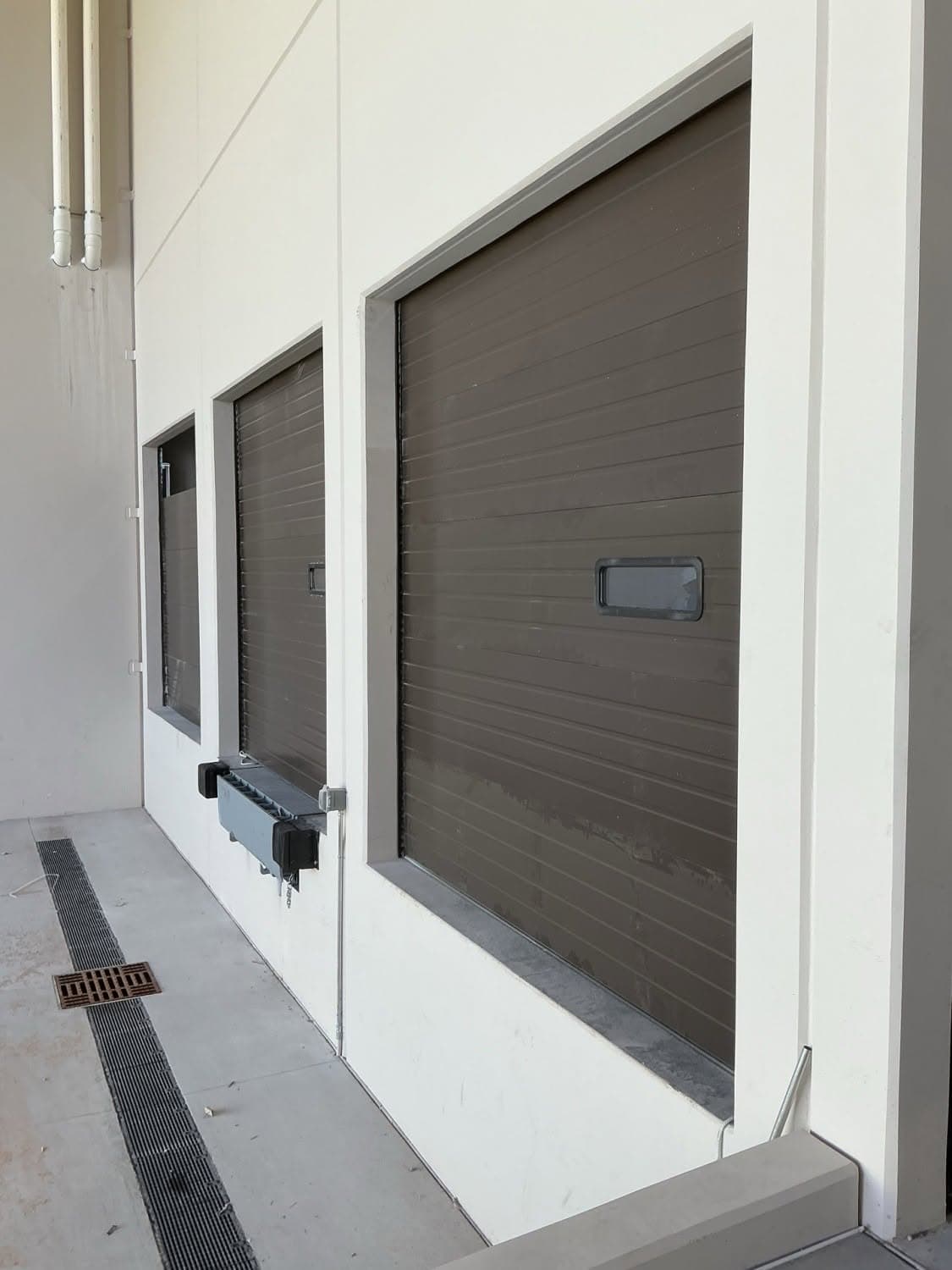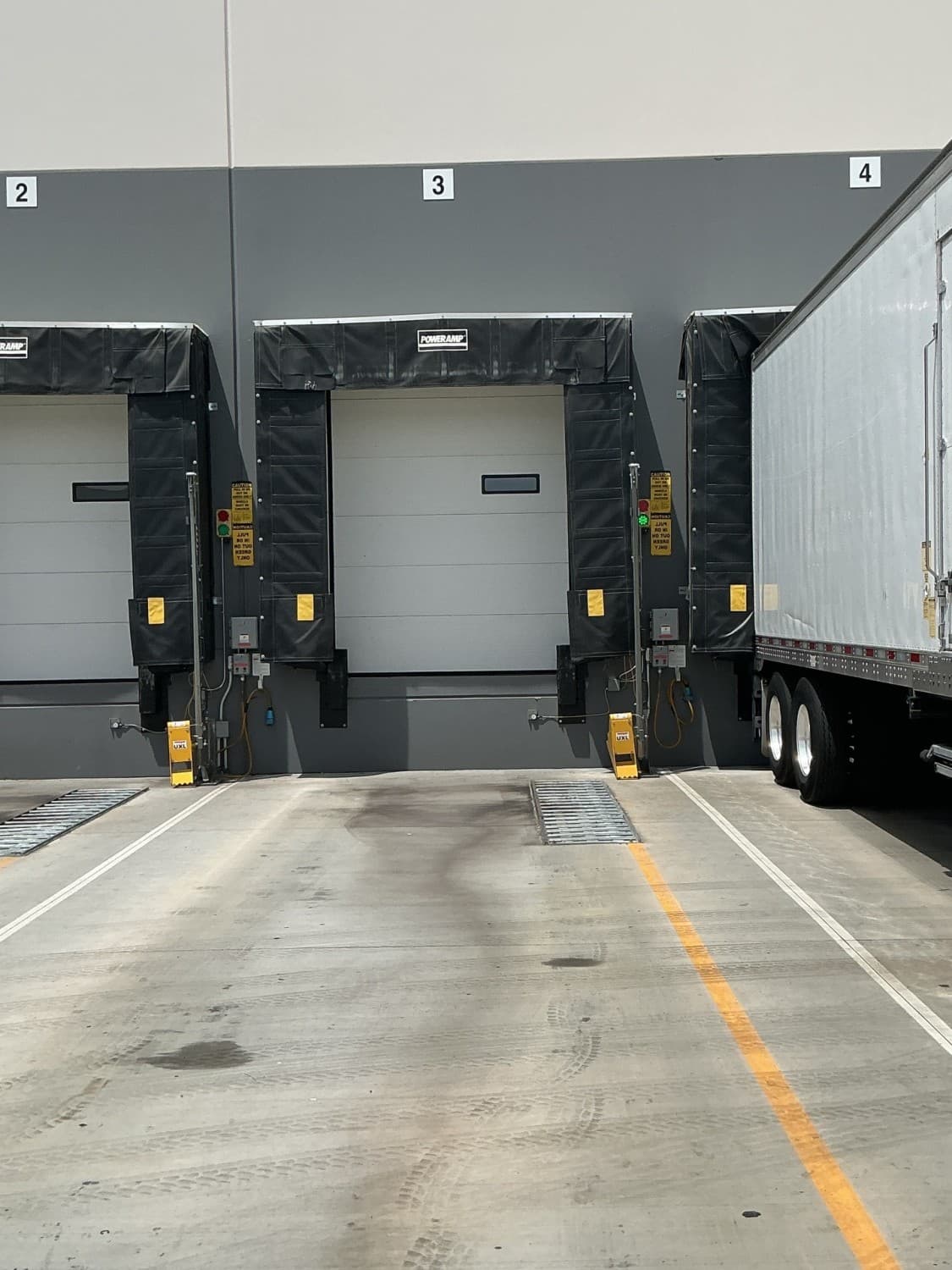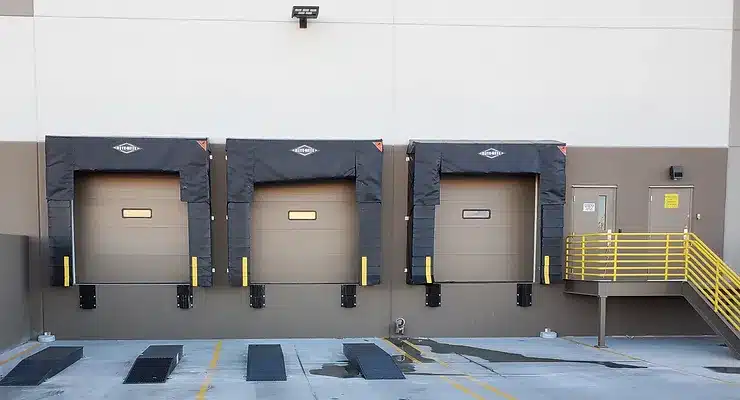
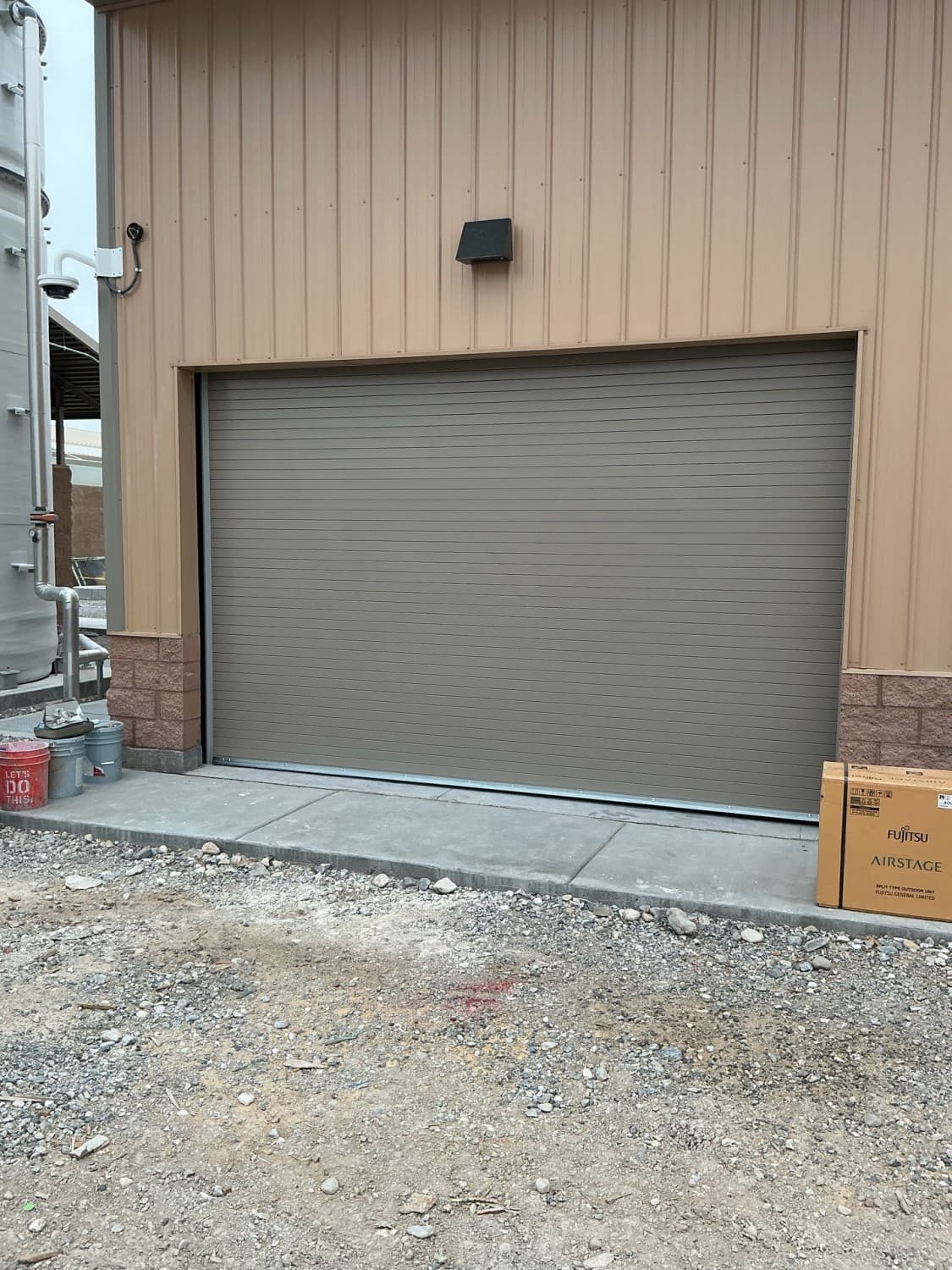
A commercial rollup door is a door made of interlocking horizontal slats that coil into a compact barrel above the opening. Instead of lifting up and back on overhead tracks the way a sectional door does, the whole curtain rolls up around a drum mounted over the doorway. That design is why rollup doors are so common on warehouses, loading docks, storefronts, self-storage, and parking garages: they seal an opening securely while taking up almost no ceiling space. It is one of the core pieces of commercial door hardware in any working facility.
Because the curtain coils overhead rather than sliding under the ceiling, a rollup door frees up the space above and behind the opening for lighting, racking, HVAC, or dock equipment. It also gives you a tough, security-minded closure that stands up to daily commercial use.
How a Rollup Door Works
A rollup door has a few main parts: the curtain (the interlocking slats), the guides on each side that the curtain rides in, the barrel (the drum the curtain wraps around), the hood that covers the coiled curtain, and the bottom bar at the base. A spring or counterbalance inside the barrel offsets the weight of the curtain so it can be raised by hand or by a motor. When the door opens, the curtain lifts and wraps around the barrel; when it closes, it unrolls down the guides and the bottom bar meets the floor.
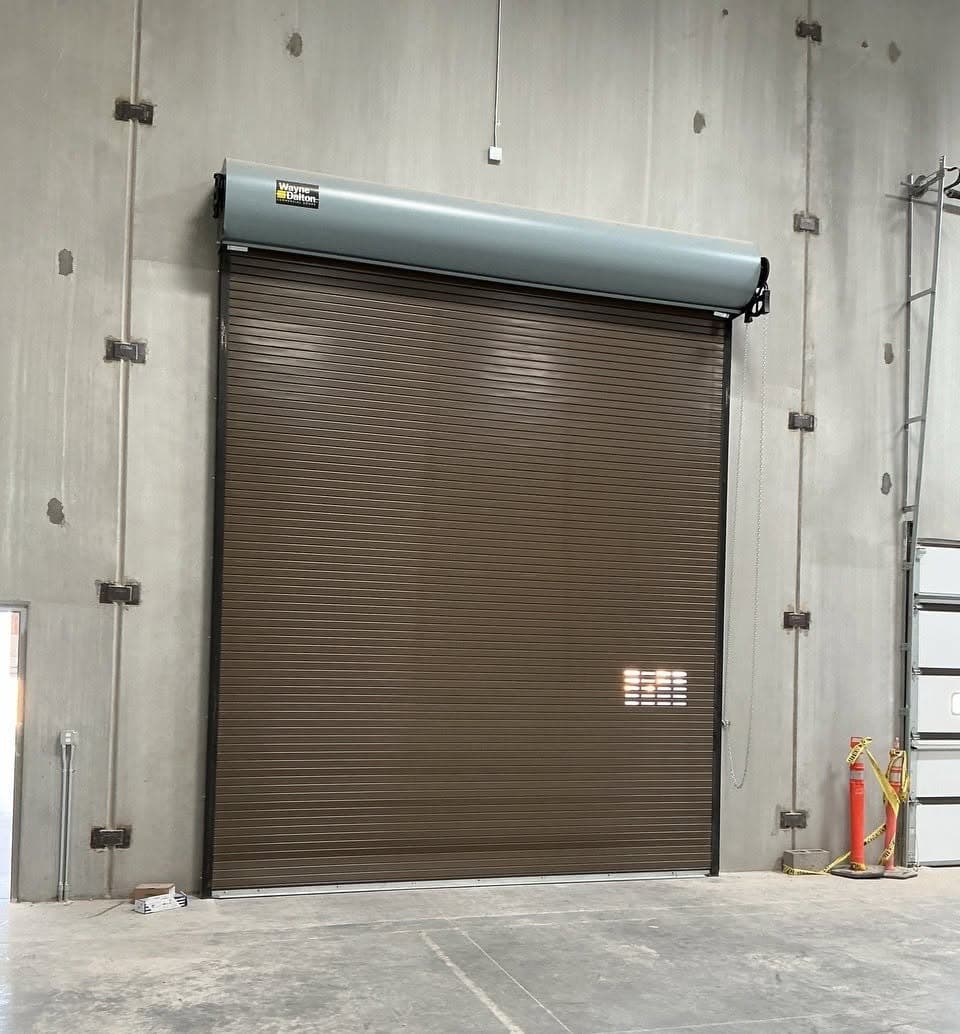
Types of Commercial Rollup Doors
Rollup doors come in several variations, each suited to a different job.
- Rolling service doors: The everyday workhorse. Interlocking steel or aluminum slats for warehouses, loading bays, shops, and storage. Built for security and heavy daily cycling.
- Insulated rollup doors: Slats with an insulating core to help hold temperature and cut noise. A common choice for climate-sensitive spaces and for keeping Las Vegas heat out of a conditioned building.
- Rolling steel fire doors: Fire-rated rollup doors held open by a release that lets them close automatically during an alarm to help contain fire and smoke. These are code-driven, and closely related to other fire-rated door assemblies.
- Rolling grilles: Open-mesh or perforated curtains used for mall storefronts, concourses, and parking structures, where you want to lock the opening but keep visibility and airflow.
- Counter shutters: Compact rollup doors for service counters, concession windows, and pass-throughs.
Rollup Door vs. Sectional Door
The most common question is how a rollup door differs from a sectional overhead door. Both close a large opening, but they move very differently, and that changes where each one fits.
| Feature | Rollup Door | Sectional Door |
|---|---|---|
| How it opens | Curtain coils into a barrel above the opening | Panels bend back onto ceiling tracks |
| Ceiling space needed | Very little | Significant overhead track room |
| Best for | Tight headroom, security, high cycles | Insulation-first, climate-controlled bays |
| Footprint | Compact hood over the opening | Tracks run back along the ceiling |
Manual vs. Motorized Operation
Smaller rollup doors can be operated manually with a push-up lift or a chain hoist. Larger and heavier doors, and any door that cycles many times a day, are usually fitted with an electric operator for push-button or remote control. Motorizing a high-traffic door reduces operator strain and wear on the counterbalance, and it is often the difference between a door that lasts and one that wears out early.
Materials, Insulation, and Wind Load
Most commercial rollup curtains are galvanized or stainless steel, with aluminum available where weight or corrosion resistance matters. Slats come in different gauges, so a high-security or high-cycle opening gets a heavier curtain than a low-traffic storage unit. Insulated slats add an R-value for climate control, and exterior doors on exposed buildings may need a specific wind-load rating to meet code. Matching the material and gauge to the opening is a big part of getting a door that lasts.
What Affects the Cost of a Rollup Door
There is no single price for a commercial rollup door, because a handful of factors move the number:
- Opening size: larger and taller openings need more curtain and a heavier counterbalance.
- Material and gauge: heavier steel and stainless cost more than light-gauge slats.
- Insulation: insulated curtains cost more than single-wall slats.
- Fire rating: rolling steel fire doors carry rated hardware and testing requirements.
- Manual vs. motorized: an electric operator and controls add to the total.
- Installation and site prep: a new opening, jamb work, and electrical differ from a straight replacement.
Because of that spread, the most useful number is a quote built around your actual opening. Our commercial team can measure the doorway and price a commercial door installation to fit the building and the budget.
Maintenance, Lifespan, and When to Repair
A well-maintained rollup door lasts for years of daily use. Routine service, keeping the guides clean and lubricated, checking the barrel spring tension, inspecting the slats and bottom bar, and servicing the operator, is what protects that lifespan and keeps the opening working when you need it.
Watch for warning signs: a door that binds or jerks in the guides, will not stay up or drifts down, has bent or dented slats, grinds or squeals, or a motor that struggles. Caught early, most of these are a straightforward commercial door repair. Ignored, they become a stuck door and lost access to the space.
Commercial Rollup Doors in Las Vegas
The right rollup door depends on the opening, the traffic, and whether you need insulation, a fire rating, or a security grille. Hearth and Home Specialties installs and services commercial rollup doors across the Las Vegas valley. Whether you need a new rollup door, a replacement, or ongoing service from our commercial team, we can help you find the right fit. Contact us for a free estimate.
Frequently Asked Questions
What is the difference between a rollup door and a sectional door?
A rollup door is one continuous curtain of interlocking slats that coils around a barrel above the opening. A sectional door is made of hinged panels that bend back and travel along horizontal tracks under the ceiling. Rollup doors take up almost no ceiling space, which makes them the better fit when headroom is tight or the space above the opening is needed for other equipment.
How much does a commercial rollup door cost?
Cost depends on the opening size, the slat material and gauge, whether the door is insulated or fire-rated, and whether it is manual or motorized. A small manual service door and a large insulated motorized door are very different numbers, so a site-specific quote is the only reliable way to budget for one.
Can a commercial rollup door be motorized?
Yes. Rollup doors can be operated manually with a push-up or chain hoist, or fitted with an electric operator for push-button and remote control. Larger and heavier doors, and doors that cycle many times a day, are usually motorized to reduce wear and operator strain.
What is a rolling steel fire door?
A rolling steel fire door is a rollup door built to a fire rating and held open by a release mechanism. When a fire alarm or fusible link triggers, the door closes automatically to help contain fire and smoke at a rated opening. These are code-driven and should be installed and tested by a qualified commercial team.
How long do commercial rollup doors last?
A quality rollup door serviced on a regular schedule commonly lasts many years of daily commercial use. Lifespan depends on cycle count, load, the environment, and maintenance. Keeping the guides clean, the barrel spring tension correct, and the operator serviced is what protects it.
How do I know if my rollup door needs repair?
Watch for a door that binds or jerks in the guides, will not stay up or drifts down, has bent or dented slats, makes grinding noises, or has a motor that struggles or stops. Any of these are worth a service call before they turn into a stuck door and lost access.