Every fire door assembly in a Las Vegas commercial building must be inspected and tested at least once a year under NFPA 80, the national standard for fire doors. A qualified person checks that the door is labeled, undamaged, closes and latches on its own, and stays within gap limits, then signs a written record for the fire marshal.
That annual inspection is the building owner's responsibility, not the fire department's. The fire marshal checks that it happened, usually by asking to see the records.
What Does NFPA 80 Require for Fire Door Inspections?
NFPA 80, the Standard for Fire Doors and Other Opening Protectives, is published by the National Fire Protection Association. Its current edition is 2025, but the edition enforced in a building is the one referenced by the locally adopted code, so an inspector may be working to the 2019 or 2022 edition. Across those recent editions, the core inspection rules are the same:
- Annual inspection and testing. Every fire door assembly is inspected and operated at least once a year.
- Acceptance testing. New assemblies are inspected after installation, and doors are checked again after repairs or maintenance.
- Both sides of the door. The inspection is visual from both sides plus an operational test of the closer and latch.
- A qualified inspector. The person doing the work needs knowledge of the type of door being inspected.
- Written, signed records. Results are documented door by door and kept for the authority having jurisdiction, the AHJ.
- Repairs without delay. Deficiencies found during the inspection are corrected promptly, not left for next year.
Which Fire Code Applies in Las Vegas, Clark County, and Henderson?
Southern Nevada does not have a single fire code. Each jurisdiction adopts the International Fire Code, the IFC, on its own schedule and adds local amendments. Unincorporated Clark County, which includes the Strip, is served by the Clark County Fire Department and adopted the 2024 IFC with local amendments, effective January 2026. The City of Las Vegas, through Las Vegas Fire & Rescue, along with Henderson and North Las Vegas, adopt and amend the IFC through their own ordinances.
What they share is the link to NFPA 80. The IFC requires opening protectives in fire-resistance-rated assemblies, which includes fire doors, to be inspected and maintained in accordance with NFPA 80. The fire marshal for your address is the AHJ, the final word on which edition applies, how records are reviewed, and whether anything beyond NFPA 80 is expected. Section numbers inside NFPA 80 have also moved between editions, so ask which one your AHJ enforces.
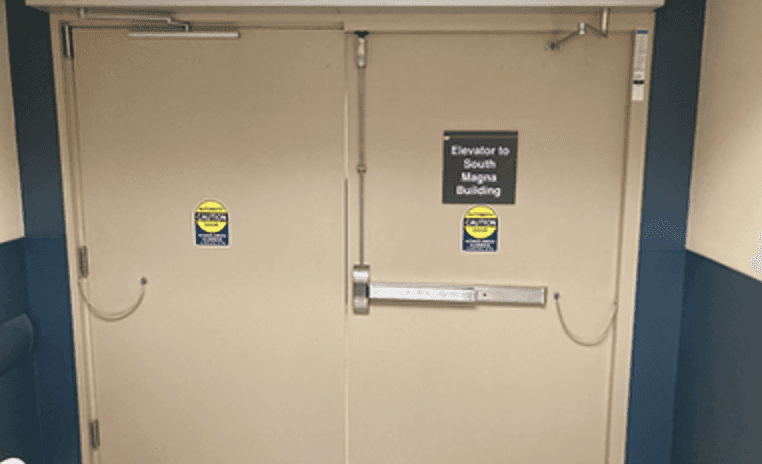
Who Is Allowed to Inspect Fire Doors?
NFPA 80 does not name one license or certificate. It requires a qualified person, which it defines as someone who, through a recognized degree, certificate, professional standing, or skill, and through knowledge, training, and experience, has shown the ability to deal with the subject matter.
Training programs exist, the best known being the Fire Door Assembly Inspector (FDAI) credential from the Door and Hardware Institute, and many owners prefer a certified inspector. Before you hire, ask your AHJ whether it expects a particular credential, and make sure your inspector's report will include everything the records section below requires.
What Is on the Annual Fire Door Inspection Checklist?
For swinging fire doors with builders hardware, the most common type in commercial buildings, NFPA 80 lists 13 items to verify. NFPA's own inspection checklist for swinging doors, based on the 2019 edition, walks through them. Here they are in plain language:
- Labels. The door and frame labels are present, clearly visible, and legible.
- No holes or breaks. There are no open holes or breaks in the surface of the door or frame.
- Glazing. Any glass, vision light frames, and glazing beads are intact and securely fastened.
- Alignment. The door, frame, hinges, hardware, and noncombustible threshold are secure, aligned, and working, with no visible damage.
- Nothing missing. No parts are missing or broken.
- Clearances. The gaps around and under the door do not exceed the NFPA 80 limits.
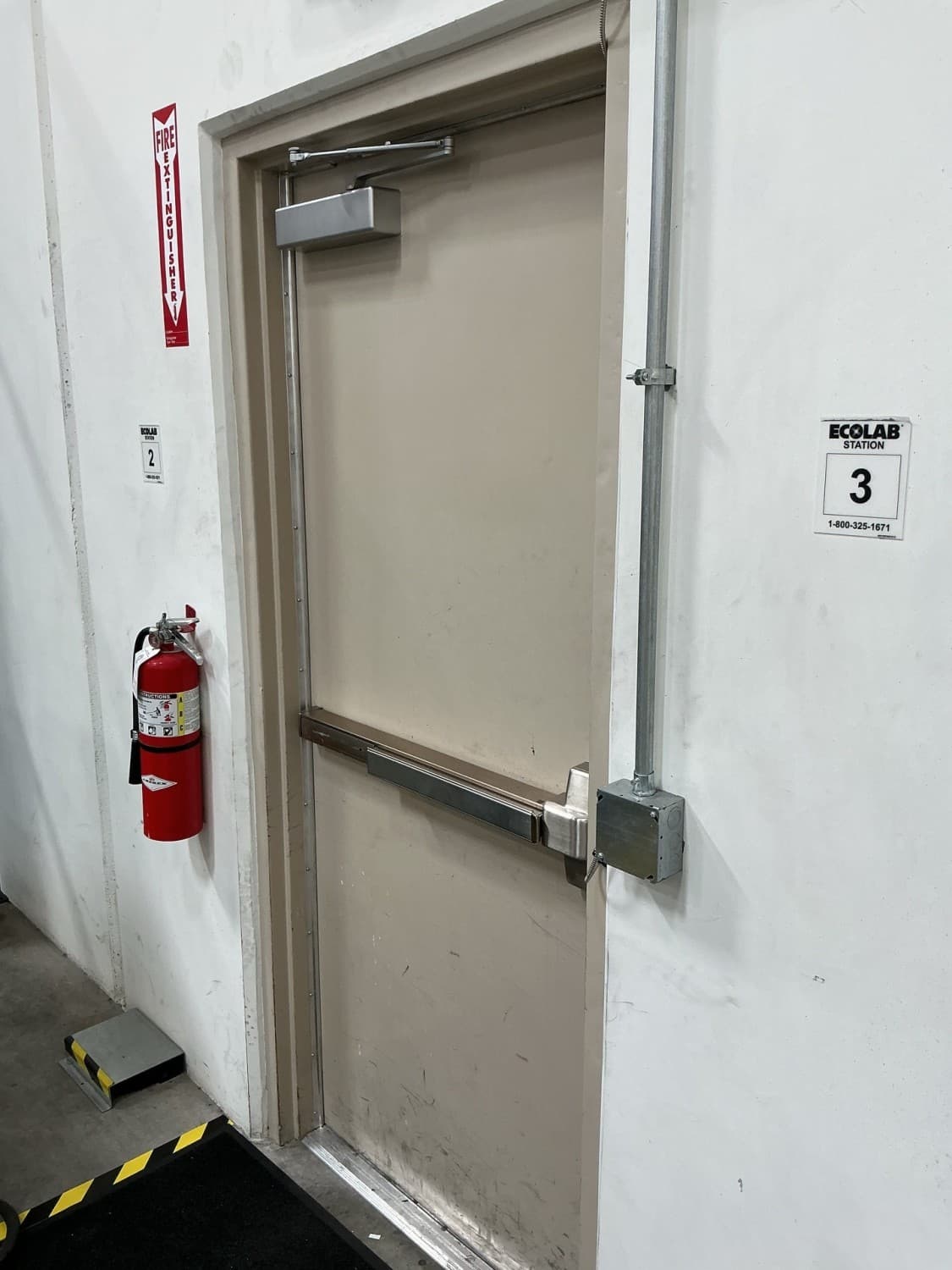
- Self-closing. The closer is operational, and the active door closes completely from the fully open position.
- Coordinator. On pairs with a coordinator, the inactive leaf closes before the active leaf.
- Latching. The latch operates and secures the door when it is closed.
- No interfering hardware. No auxiliary hardware on the door or frame interferes with or prevents operation.
- No label-voiding modifications. Nothing has been done to the door in the field that voids its label.
- Seals. Meeting edge protection, gasketing, and edge seals, where required, are present and intact.
- Signage. Any signs on the door meet NFPA 80. The NFPA checklist notes they cannot exceed 5 percent of the door's area, must be attached with adhesive rather than screws, and cannot be applied to fire protection glazing.
The NFPA checklist recommends running the operational test three times, opening the door fully and letting it close and latch on its own each time. Rolling, sliding, and other door types have their own checklists in NFPA 80.
What Are the Gap and Clearance Limits for Fire Doors?
Excess clearance is one of the most common reasons a fire door fails, because smoke and flame travel through gaps. Clearances are checked on the pull side of the door, at the outermost leading edge, along the full height and width of the door, not just spot-checked. Door sweeps and shoes do not count toward closing a bottom gap, because they are not tested or listed to extend a fire-rated door, according to Door Safety's guidance on measuring fire door gaps.
| Location | NFPA 80 limit |
|---|---|
| Under the bottom of the door | 3/4 inch maximum, measured to the top of the floor or threshold |
| Under a door whose bottom is more than 38 inches above the floor | 3/8 inch maximum |
| Top and vertical edges, hollow metal (steel) doors | 1/8 inch, plus or minus 1/16 inch |
| Meeting edges of pairs of hollow metal doors | 1/8 inch, plus or minus 1/16 inch |
| Top and vertical edges, fire-rated wood doors (3/4 hour and higher) | 1/8 inch maximum |
A door that sags on worn hinges, or a frame knocked out of square by carts, can drift out of these limits even if it was installed correctly.
How Should Self-Closing, Latching, and Hold-Open Devices Work?
A fire door only does its job when it is closed and latched. That is why the closer and the latch get an operational test every year. From the fully open position, the door has to swing shut on its own and the latch has to engage and hold it closed. A door that stops an inch short, bounces off the strike, or needs a push to latch fails.
Fire doors that need to stand open for traffic can use an automatic-closing setup, such as an electromagnetic hold-open tied to the fire alarm. Per the NFPA checklist, the door must become self-closing when the hold-open is activated or loses power, and where it is tied into the fire alarm, the inspection tests that release. Wedges, kick-down holders, and doors blocked open with furniture or boxes all appear on the Door Security and Safety Foundation's list of the top fire door deficiencies.
What Do Fire Door Labels Mean, and What If One Is Missing?
The label on the door edge and the frame shows that the assembly was built to a tested, listed design with a specific fire rating. Inspectors check that both labels are present and readable, so painting over a label is a deficiency. For background on ratings, materials, and where each rating is used, see our guide to fire-rated doors in Las Vegas.
A missing, painted, or illegible label cannot be fixed by sticking on a new one. A listing laboratory has to evaluate the assembly in the field, and labs such as Intertek offer fire door field labeling for doors whose labels were removed, painted over, or never applied. If the door cannot be relabeled, it is replaced with a labeled assembly.
What Records Do You Need to Keep?
The written record is what the fire marshal reviews, so treat it as part of the inspection. A complete record usually includes:
- The date of the inspection and the facility name and address.
- The name, company, and address of the inspector, and the inspector's signature.
- An individual record for each door, with an opening identifier and location.
- The type of door and how it operates: self-closing, automatic-closing, or power-operated.
- Confirmation of the visual inspection and operational test.
- A list of every deficiency found.
Keep periodic inspection records for at least three years, and keep acceptance test records from installation for the life of the door. When a deficiency is repaired, document the repair and the follow-up check alongside the original finding.
What Are the Most Common Reasons Fire Doors Fail?
The Door Security and Safety Foundation's top ten list for swinging doors reads like a tour of a busy building's back hallways:
- Painted or missing labels.
- Clearances around the door that are too large.
- Kick-down door holders.
- Auxiliary hardware that interferes with how the door works.
- Doors blocked to stay open.
- Furniture, equipment, or boxes blocking the area around the door.
- Broken, defective, or missing hardware, such as latch bolts, strike plates, and closer arms.
- Fire exit hardware on doors that are not labeled for it.
- Missing or incorrect fasteners.
- Bottom flush bolts that do not project 1/2 inch into the strike.
Should You Repair or Replace a Failed Fire Door?
Most failures are repairs. Closers, latches, hinges, strikes, and seals wear out, and replacing them with the right listed parts brings the door back into compliance without touching the label. Repair is usually the answer when:
- The door will not close completely or will not latch.
- The closer is leaking, broken, or adjusted wrong.
- Gaskets, edge seals, or intumescent seals are damaged or missing.
- Hinges have worn and the door has sagged out of its gap limits.
- A kick-down holder or other unlisted hardware needs to come off.
Replacement makes sense when the label is gone and the assembly cannot be field labeled, when the door or frame is too damaged to repair, or when field modifications such as oversized holes or cut-down doors have voided the rating. The door or frame is then replaced with a labeled assembly rated for the opening.
Fire Door Inspection and Repair in Las Vegas and Henderson
Hearth and Home Specialties provides fire door inspection, repair, and replacement in Las Vegas and Henderson. On an annual inspection, we verify each door closes and latches completely, check frames, seals, and hardware, and document every door for your inspection records. We repair doors that fail to latch, damaged intumescent seals, broken closers, and bent frames, replacing closers, latches, hinges, and seals without voiding the label. When a door is too damaged or no longer carries a valid label, we supply and install labeled fire door assemblies in standard and custom sizes, including steel and fire-rated glass doors and frames. Fire doors are one part of our commercial door services for property managers, building owners, and general contractors.
To schedule a fire door inspection or request a repair, call (702) 474-4099 or submit a service request online. This guide is general information. Your fire marshal, the authority having jurisdiction, has the final word on what applies to your building.
Fire Door Inspection FAQs
How often do fire doors need to be inspected?
NFPA 80 requires every fire door assembly to be inspected and tested at least once a year. Doors are also checked when they are first installed and again after repair or maintenance work, and each inspection is recorded.
Who can perform a fire door inspection in Las Vegas?
NFPA 80 calls for a qualified person with knowledge of the type of door being inspected. It does not require one specific certification, though training such as DHI's Fire Door Assembly Inspector program exists. Your fire marshal may set additional expectations.
What is the maximum gap under a fire door?
Under NFPA 80, the clearance under the bottom of a swinging fire door is 3/4 inch maximum, measured from the bottom of the door to the top of the floor or threshold. It drops to 3/8 inch when the door bottom sits more than 38 inches above the floor.
How long do you keep fire door inspection records?
Keep periodic inspection and testing records for at least three years, signed by the inspector and available to the authority having jurisdiction. Acceptance test records for newly installed doors are kept for the life of the assembly.
Can a fire door be propped open?
Not with a wedge, kick-down holder, or other manual prop. A fire door may stand open only on a hold-open device that releases on a fire alarm signal or loss of power, so the door closes and latches on its own.
What happens if a fire door fails inspection?
NFPA 80 requires deficiencies to be corrected without delay, then the door is checked again. Hearth and Home Specialties repairs and replaces commercial fire doors in Las Vegas and Henderson. Call (702) 474-4099.